Choosing the right pool temperature is more complicated than turning a dial. Water at 78°F can feel refreshing during active swimming. It may feel cold during quiet evening use. The real question is, what is the best temperature setting for pool heat pumps?
The U.S. Department of Energy reports that pool heating is often one of the largest energy expenses for pool owners. Its Energy Saver guidance also notes that a pool cover can reduce heating costs by 50% to 70%. Every extra degree matters. Industry guidance commonly places comfortable recreational swimming between 78°F and 82°F. Therapy pools often require higher temperatures, but comfort is only one factor.
Ray Isaac, AquaCal founder and a recognized pool-heating specialist, has stated, “The best pool temperature is the lowest temperature that keeps swimmers comfortable.” That principle supports efficient heat-pump operation. However, it is not perfect for every household. Children, older swimmers, shaded pools, and humid climates may need different settings. A thermometer can show 80°F, while wind across wet shoulders still feels chilly.
This guide compares five practical temperature settings, from energy-conscious swimming to warmer comfort. It considers outdoor air, humidity, swimming intensity, heat-pump efficiency, and cover use. The best setting may not be the warmest one. It may be the setting that feels comfortable without forcing the system to run continuously. Check the water regularly. Small adjustments can prevent wasted energy and disappointing swims.
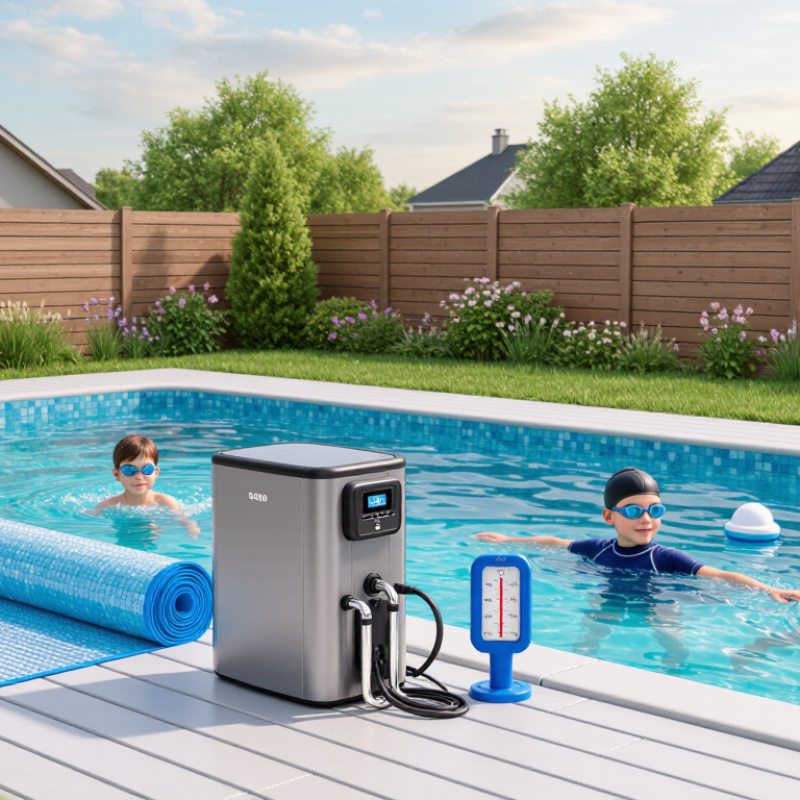
Pool heat pump settings should begin with comfort, not the highest number on the control panel. The CDC’s Model Aquatic Health Code lists 78–86°F as a common range for many swimming pools. For active swimming, 78°F feels refreshing. Around 80°F suits most families. At 82°F, children and older swimmers often feel more comfortable. Higher settings can help therapy-style use, but they usually increase operating time.
Temperature is only one comfort factor. Air temperature, wind, humidity, sunlight, and swimmer activity change how warm water feels. A covered pool loses less heat overnight. An uncovered pool can lose substantial energy through evaporation, especially during windy weather. The U.S. Department of Energy reports that heat pumps can deliver roughly two to four units of heat for each unit of electricity used, depending on conditions and equipment performance. Colder air can reduce that advantage.
Measure before adjusting. Check the water at the same time each day, preferably away from return jets. Raise the setting by 1°F and observe comfort for several hours. Do not chase a perfect number.
My practical preference is 78°F for exercise, 80°F for general use, 82°F for relaxed family swimming, 84°F for gentle activity, and 86°F for limited therapeutic comfort. These are starting points, not rules. A thermometer, pool cover, and weekly energy review may reveal that 80°F works better than 84°F, even when the control panel suggests otherwise.
5 Best Pool Heat Pump Temperature Settings?
Setting 78°F is a practical choice for everyday swimming. The CDC’s Model Aquatic Health Code places typical recreational pool temperatures near the 78–86°F range. At 78°F, the water feels refreshing without demanding constant heating. A swimmer may notice a slight chill during slow laps. That is the trade-off.
The U.S. Department of Energy reports that heat pump pool heaters can achieve a coefficient of performance between 3.0 and 7.0. Efficiency changes with air temperature, humidity, pool cover use, and equipment sizing. Keep the pump near 78°F, then use these settings for different needs: 80°F for children, 82°F for relaxed family swimming, 84°F for longer exercise sessions, and 86°F for therapy-style comfort. Higher settings consume more energy.
Watch the night temperature. A covered pool can lose less heat than an uncovered pool, especially during cool, windy hours. Measure the water near the return jet and at the opposite wall. Readings may differ. That small detail matters. In practice, raising the thermostat one degree can feel useful, but it may also extend operating time noticeably. DOE guidance supports using a cover when the pool is not active, yet covers can be inconvenient. That is where real-world habits often defeat good energy plans. Test 78°F for one week, record runtime, and adjust slowly.
For most residential pools, 80°F offers a practical balance between comfort and operating costs. The U.S. Centers for Disease Control and Prevention’s Model Aquatic Health Code identifies 78–86°F as a common recreational water range. At 80°F, swimmers usually avoid the sharp chill of cooler water without demanding excessive heater runtime. It feels steady on the skin. That matters during evening use.
Five useful temperature settings are 78°F, 80°F, 82°F, 84°F, and 86°F. Choose 78°F for exercise and lower energy use. Use 80°F for regular family swimming. Set 82°F when children or older adults need gentler comfort. Reserve 84°F for longer, relaxed sessions. The 86°F setting suits therapy-style use, but it can increase heat loss and humidity around indoor pools. Personal experience often reveals the gap between a thermostat number and real comfort.
Operating conditions change the result. The U.S. Department of Energy reports that evaporation is the largest source of swimming-pool heat loss, while a pool cover can reduce heating costs by 50–70%. Wind, dry air, and uncovered nighttime water can undermine an efficient setting. Check the water temperature with an independent thermometer, not only the control panel. Keep the cover on after swimming. Small habits count. An 80°F setting may still be expensive during cold, windy weather, so reviewing energy use each month is wise. The “perfect” temperature is not perfectly fixed.
An 82°F pool setting offers a comfortable balance for families and extended swimming sessions. It feels warm enough for children, casual exercise, and older swimmers who dislike sudden chills. In practice, comfort depends on air temperature, wind, humidity, and sunlight. A cloudy, breezy afternoon can make 82°F feel cooler than expected.
Set the heat pump before the planned swim, not just when guests arrive. Raising water temperature takes time, especially after cool nights. A fitted pool cover helps retain heat between sessions and reduces evaporation. Keep the cover on when the pool is unused. Check the water with a reliable thermometer, because the heater display may not show the temperature at every swimming area.
Families may prefer 82°F during longer weekends, but this setting can increase electricity use. A lower temperature may suit short swims or mild weather. Children should still take regular breaks, even when the water feels pleasant. Watch for tiredness, shivering, or unusual quietness. Those signs matter more than the number on the control panel.
Clean the filter and keep water flow steady. Poor circulation can reduce heating performance and create uneven temperatures. Follow the equipment manual and ask a qualified pool technician about installation or repairs. My own adjustment would be gradual: try 80°F, then raise it to 82°F after observing real comfort, weather, and operating costs. Perfect settings are rarely permanent.
5 Best Pool Heat Pump Temperature Settings: Using 84°F for Children, Seniors, and Therapeutic Swimming
For many families, 84°F offers a comfortable starting point for children and seniors. It feels warm without becoming excessively hot during gentle activity. Children can lose body heat quickly, especially during pauses or evening swims. Seniors may also prefer warmer water because stiff joints often respond better to consistent heat. Still, comfort varies. A swimmer recovering from illness or managing a medical condition should follow professional guidance before changing pool temperatures.
Therapeutic swimming may require 84°F to 88°F, depending on movement, water depth, and session length. Short exercise sessions can feel comfortable at 84°F. Slower stretching may need slightly warmer water. Use a reliable pool thermometer, not only the heat pump display. Sensors can differ by location. Check the shallow and deep ends, especially after overnight heating. I once assumed one reading represented the whole pool. That was not always true.
Tips: Raise the temperature gradually, about 1–2°F at a time. Keep children supervised, even when the water feels comfortable. A clean, fitted cover helps retain heat between sessions. Watch for shivering, unusual tiredness, dizziness, or flushed skin. These signs matter more than the number on the control panel. Lower the setting if swimmers feel overheated. Humidity and outdoor wind can also change how 84°F water feels.
Around 80–82°F usually feels comfortable for children, adults, and older swimmers. Start there. Weather can change that feeling.
About 78°F often feels refreshing during exercise. Active swimmers generate body heat, so warmer water may feel heavy.
Yes. It balances comfort for children, casual exercise, and older swimmers. A cloudy, windy afternoon may still feel cooler.
Yes. Start heating before the planned session. Water temperature rises slowly, especially after a cold night.
Use a reliable thermometer away from return jets. Check at the same time each day. The display may not reflect every area.
A fitted cover reduces overnight heat loss and evaporation. Keep it on when the pool is unused. Wind makes uncovered water lose heat quickly.
Usually. Higher settings can extend operating time and raise energy consumption. Review weekly costs before choosing 84–86°F.
Try 80°F first, then increase by 1°F after several hours of observation. Do not chase a perfect number. Comfort is imperfect.
Air temperature, wind, humidity, sunlight, and swimming activity all matter. An 82°F pool may feel chilly under gray skies.
Watch for shivering, tiredness, or unusual quietness. The control panel cannot judge comfort. Regular breaks remain sensible.
Choosing the right pool heat pump temperature depends on comfort, swimmer age, activity level, weather, and operating costs. If you are wondering, “what is the best temperature setting for pool heat pumps,” there is no single answer for every household. A setting of 78°F is a practical choice for everyday swimming and helps reduce energy use. Raising the temperature to 80°F offers a comfortable balance between warmth and efficiency, making it suitable for regular family use.
For longer swimming sessions or households with children, 82°F can provide a more inviting and comfortable experience. A setting of 84°F is often better for young children, older adults, or therapeutic swimming because the warmer water may feel gentler and more relaxing. Keep in mind that higher temperatures usually require more energy, especially in cool or windy conditions. Adjusting the setting according to the season, pool usage, and swimmer comfort can help maintain an enjoyable pool while managing heating expenses.

PeakWay Pump