China Top 10 High Temp Heat Pumps for Industrial Washing

Time:2026-11-25 Author:Isabella
0%

Industrial washing plants need dependable hot water for cleaning tanks, trays, drums, and production equipment. A high-temperature heat pump can recover useful heat and supply hot water for wash and rinse stages. Its performance depends on the required temperature, operating hours, water quality, and existing heating system. The details matter. A unit that suits a food-processing line may not fit a textile plant with different flow rates and cleaning cycles.

This guide introduces China’s top 10 high-temperature heat pumps for industrial washing, with attention to heating capacity, outlet temperature, efficiency data, controls, and service support. It also addresses why use a high temperature heat pump for industrial washing: lower operating energy may be possible when the system is correctly selected and integrated. But claimed savings are not automatic. They depend on local electricity prices, incoming water temperature, and the plant’s real demand. Buyers should confirm performance figures with manufacturers and compare test conditions, not just headline specifications. A short site assessment can reveal practical issues, such as space near a wash tank or the need for backup heat during peak demand. No shortlist can settle every plant’s choice. Specifications change, and a promising catalog figure may not reflect a busy production shift. Use the comparisons as a starting point, then verify temperature, capacity, installation requirements, and after-sales support for your own process.
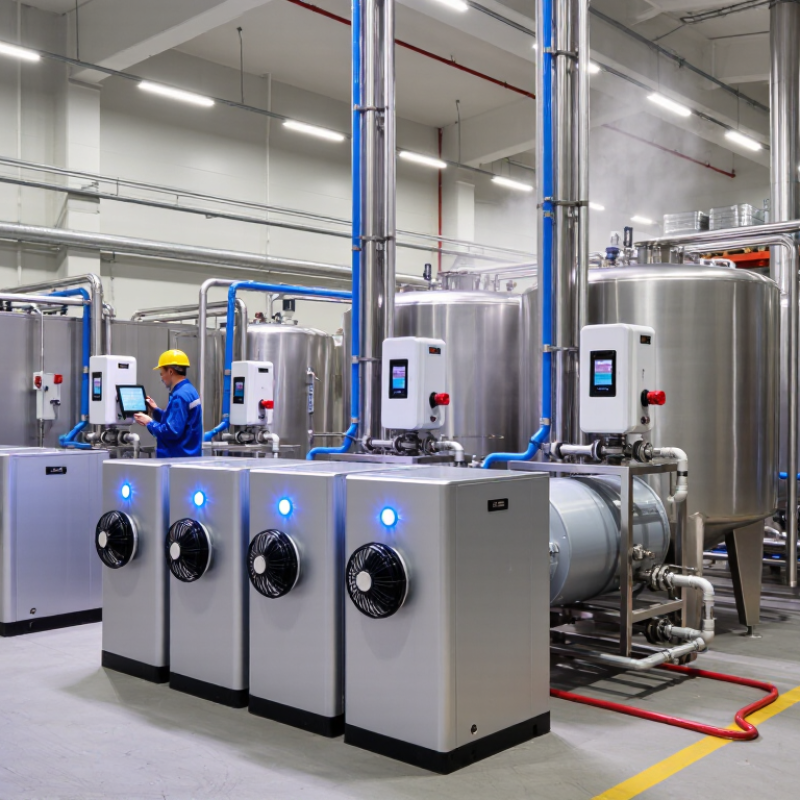
China Top 10 High Temp Heat Pumps for Industrial Washing

Understanding High-Temperature Heat Pumps for Industrial Washing

Understanding High-Temperature Heat Pumps for Industrial Washing

High-temperature heat pumps transfer heat from a lower-temperature source into process water. In industrial laundries and wash lines, that source may be warm wastewater, equipment cooling water, or outdoor air. The pump raises the heat to a useful level for washing and rinsing. Depending on the system and process, water may need to reach roughly 60–90°C. Actual requirements vary.

The key is matching the heat pump to the site’s temperature profile. A unit works differently when supplied with 25°C wastewater than with 10°C air. Heat exchangers can recover warmth before wastewater leaves the facility, while a buffer tank helps manage changing demand between wash cycles. Operators should track inlet and outlet temperatures, water flow, and energy use. Small readings matter. Fouling on a heat exchanger can reduce heat transfer, so inspection and cleaning belong in routine maintenance. In practice, a tidy design diagram can be misleading; real production schedules and water quality are rarely so tidy.

Tips: Compare measured heat demand across a full production week before sizing equipment. Check whether recovered heat is available when washing starts, and leave room for backup heating during peak loads. Estimates can be imperfect. Verify them with site data.

Key Criteria for Ranking China’s Industrial Heat Pump Options

Ranking China’s industrial heat pumps for washing starts with the process, not the brochure. Record inlet and target water temperatures, hourly flow, cleaning cycles, and heat-source variation. A steady 70°C rinse differs from short sanitation peaks. The IEA’s The Future of Heat Pumps (2022) reports that heat pumps are typically three to five times more energy-efficient than gas boilers. Treat this as a benchmark, not a site guarantee.

Compare delivered temperature and heating capacity under real operating conditions. Check COP with both source and supply temperatures disclosed; a high lab figure can mislead. Assess recovery time, part-load control, water quality requirements, corrosion protection, service access, and integration with existing tanks. The IEA Heat Pumping Technologies Annex 58 report (2021) examines high-temperature heat-pump applications and performance assessment. Use its engineering focus to ask for comparable operating data, not just rated output. A polished ranking still has a blind spot: factory schedules and water conditions vary.

Tips: Request measured seasonal data from a comparable washing process. Check the meter readings. Ask how performance changes during cold starts and peak demand. Then compare lifecycle energy use, not purchase price alone.

China’s Top 10 High-Temperature Heat Pumps for Industrial Washing

China’s top ten high-temperature heat pumps for industrial washing should be compared by process fit, not headline capacity. A textile wash line, food-processing washer, and metal-parts cleaning bath each needs different water temperatures and flow rates. Check whether each unit can hold temperature during peak demand, not just heat a full tank once. Small detail, big difference.

The IEA’s 2022 report, The Future of Heat Pumps, notes that available industrial heat pumps can deliver heat up to 150°C. It also estimates heat pumps can be three to five times more energy-efficient than fossil-fuel boilers in suitable applications. These figures are useful benchmarks, not guaranteed savings. Actual performance depends on source-water temperature, operating hours, and the required wash cycle.

For a shortlist, compare outlet temperature, heating capacity, seasonal efficiency, recovery time, controls, and service support. Also assess water quality, space, noise, and integration with existing tanks. A 80–90°C wash or rinse loop may suit some facilities, but process trials should confirm cleaning results. A catalogue number can mislead. I would want measured energy use across a real shift before trusting projected savings.

China’s Top 10 High-Temperature Heat Pumps for Industrial Washing

Typical target temperatures for ten industrial washing duties (°C). These are indicative process benchmarks, not heat-pump product ratings or a vendor ranking; actual requirements vary by equipment, detergent, and validated hygiene procedures.

Comparing Temperature Range, Capacity, and Energy Performance

For industrial washing, a high-temperature heat pump should be compared at the outlet temperature the process actually needs—not by its maximum rating alone. Many systems are designed for water temperatures around 60–90°C, but available output and efficiency depend on the heat source and operating conditions. A unit rated for 80°C may deliver less heat, or use more electricity, on a cold day. Check the manufacturer’s capacity table at the intended source and delivery temperatures.

Capacity matters during real wash cycles. A small tank may need a quick temperature recovery between loads, while a continuous washer needs steady heat throughout the shift. Compare kilowatts of heating output with peak demand, and ask whether the stated figure applies during warm-up or stable operation. Details matter. Pipe losses and hot-water storage can change the result.

Energy performance is best judged using COP figures measured at comparable conditions. A high COP at a mild source temperature may not represent winter operation or a 75°C wash-water target. Request test conditions, part-load data, and expected seasonal performance. Also check whether the system can supply multiple temperature zones without frequent backup heating. Numbers can look neat on a spreadsheet; plant rooms are less tidy. Real operating data is useful, though one site’s results may not transfer directly to another.

China Top 10 High Temp Heat Pumps for Industrial Washing - Comparing Temperature Range, Capacity, and Energy Performance

Representative high-temperature heat pump configurations for industrial washing applications. Entries are not a verified product ranking and are shown without company or brand names.

Configuration Heat Source Typical Hot-Water Outlet Range Indicative Heating Capacity Indicative Heating COP Potential Washing Application Energy Performance Consideration
Air-source, single-stage high-temperature system Outdoor air 60–80°C 50–500 kW Approximately 2.0–3.0 at 7°C ambient and 70°C water outlet General wash-water heating, tank replenishment, and pre-washing Performance declines in cold weather and as the required water temperature rises.
Air-source, two-stage or cascade system Outdoor air 75–90°C 50–300 kW Approximately 1.7–2.5 at 7°C ambient and 85°C water outlet High-temperature cleaning, hot rinsing, and elevated-temperature wash tanks Staging can support higher outlet temperatures, but typically uses more electricity per unit of heat than lower-temperature operation.
Water-source heat pump Cooling water, groundwater, or other stable water source 60–90°C 100–1,000 kW Approximately 2.5–4.5; depends strongly on source and outlet temperatures Continuous wash lines and centralized hot-water loops A stable, warmer heat source and a small temperature lift generally improve efficiency.
Wastewater heat-recovery heat pump Warm process or wash wastewater 60–90°C 50–800 kW Approximately 2.5–4.0; varies with wastewater temperature and cleanliness Reusing heat from rinse water, discharge streams, or process effluent Heat recovery can reduce boiler demand; filtration and heat-exchanger cleaning are important where wastewater contains lint, oil, or chemicals.
Industrial heat-recovery system with desuperheater Refrigeration, compressed-air, or process waste heat 50–80°C 50–1,000 kW Site-specific; depends on recovered heat and system operating conditions Preheating incoming wash water or supplying low- to medium-temperature wash stages Using otherwise rejected heat can lower purchased energy, but available capacity follows the source process load.
Transcritical CO₂ heat pump Air, water, or recovered heat, depending on system design 60–90°C 20–500 kW Approximately 2.0–4.0; strongly dependent on inlet-water temperature and operating conditions High-lift water heating and systems requiring a broad hot-water temperature glide Performance is particularly sensitive to water inlet temperature, outlet temperature, and gas-cooler design.
High-temperature water-to-water heat pump Warm process water or closed-loop source water 80–100°C 100–1,000 kW Approximately 2.0–3.5; source and delivery temperatures determine the result High-temperature wash tanks, thermal disinfection, and hot-water storage charging Best suited to sites with a dependable warm source; higher delivery temperatures usually reduce COP.
Heat pump with thermal storage Air, water, or recovered process heat 60–90°C 50–800 kW heat-pump output; storage sized to the process Similar to the selected heat-pump type; storage does not itself increase COP Batch washing and facilities with sharp hot-water demand peaks Storage can shift operation to favorable periods and reduce peak demand, though tank losses should be included in system calculations.
Hybrid heat pump with boiler trim Air, water, or recovered heat, with boiler backup 60–100°C, depending on system design 100–1,500 kW combined plant capacity Heat-pump COP commonly about 2.0–4.0 at its design point; whole-plant performance varies Continuous industrial washing with strict temperature or uptime requirements The heat pump can cover steady demand while the boiler assists during peaks, low-source-temperature periods, or maintenance.
High-temperature heat pump for hot-water or low-pressure steam duty Process wastewater, cooling water, or other waste heat 90–120°C, subject to equipment and pressure limits 100–2,000 kW Approximately 1.5–3.0; highly dependent on source temperature and required delivery conditions Very high-temperature cleaning, wash-system regeneration, or preheating boiler feedwater At the upper end of the temperature range, verify refrigerant limits, pressure ratings, and performance at the specified operating point.

Data note: Temperature, capacity, and COP figures are indicative engineering ranges for system configurations, not certified specifications for individual products. COP is the ratio of heating output to electrical input at a stated operating point; comparisons require the same source temperature, outlet temperature, and test method. Confirm actual performance, capacity, refrigerant, and operating limits with project-specific technical documentation.

Selecting a Heat Pump for Industrial Washing Requirements

China Top 10 High Temp Heat Pumps for Industrial Washing

Selecting a Heat Pump for Industrial Washing Requirements

Choosing a heat pump starts with the washing line’s real temperature and flow profile, not its advertised maximum. The IEA’s 2022 report, The Future of Heat Pumps, notes that heat pumps can supply heat up to about 150°C. That is a useful technical boundary, not a recommendation to run every wash cycle that hot. Record tank temperatures, rinse-water demand, cleaning schedules, and peak recovery times. Measure the peaks.

Match the unit to the required outlet temperature and the available heat source, such as warm wastewater or compressor cooling. A bigger temperature lift usually reduces efficiency, so ask for performance data at your actual operating conditions—not only a headline COP. Check whether the system can recover heat from drained rinse water, and confirm that its output meets the busiest shift’s demand. The IEA report also identifies industrial heat as a major opportunity for heat pumps, but site-level savings depend on the process and electricity use. One weak point in many plans is incomplete operating data; even careful estimates can miss short, sharp demand peaks.

FAQS

What does a high-temperature heat pump do in an industrial wash line?

It moves heat from a lower-temperature source into process water. Warm wastewater, cooling water, or outdoor air may provide the heat. The pump raises water temperature for washing and rinsing.

What water temperature might industrial washing require?

Many processes use water around 60–90°C. The exact target depends on the wash cycle. A high maximum rating alone does not guarantee suitable output.

Which heat sources can a facility use?

Common sources include warm wastewater and equipment cooling water. Outdoor air may also be used. A 25°C wastewater supply differs greatly from 10°C air.

How should a heat pump’s capacity be checked?

Compare heating output in kilowatts with peak demand during real wash cycles. Check whether figures describe warm-up or steady operation. Small tanks may need fast recovery.

How can operators compare energy performance fairly?

Compare COP figures at similar source and delivery temperatures. Request part-load data and seasonal estimates. A mild-weather COP may not reflect winter performance.

What measurements help with equipment selection?

Track tank temperatures, rinse-water demand, flow rates, and energy use across a full production week. Measure peaks. Estimates miss things sometimes.

Can recovered heat meet every washing demand?

Not always. Heat availability may not match the start of a wash cycle, and peak loads can exceed output. Keep backup heating available.

What routine maintenance affects heat recovery?

Inspect and clean heat exchangers regularly. Fouling can reduce heat transfer. A neat diagram helps, but actual schedules and water quality can be messy.

Conclusion

This article explains how high-temperature heat pumps can support industrial washing processes that require reliable, consistent hot water. It outlines why use a high temperature heat pump for industrial washing, including the potential to reduce energy consumption, recover useful heat, and provide process water at temperatures suited to demanding cleaning tasks. It also describes the key criteria for evaluating available options, such as operating temperature range, heating capacity, energy performance, durability, and compatibility with existing equipment.

A comparison of ten options in China considers how temperature range, capacity, and efficiency may vary across different industrial needs. The article concludes with practical guidance for selecting a system based on washing volume, required water temperature, operating schedule, installation conditions, and long-term costs. By matching these factors to actual process requirements, businesses can make a more informed choice and support dependable, energy-conscious industrial washing.

Isabella

Isabella

Isabella is a dedicated marketing professional with a sharp focus on driving brand growth and engagement through strategic content creation. With an extensive background in digital marketing, she combines her passion for storytelling with her keen understanding of industry trends to deliver......