Top 5 Differences Between Air Source and Ground Source Heat Pumps?

Time:2026-05-01 Author:Isabella
0%

As the demand for energy-efficient heating solutions rises, understanding "what is the difference between air source and ground source heat pumps" becomes crucial for homeowners and industry professionals alike. According to the International Energy Agency, heat pumps can reduce energy bills by up to 50%. The distinction between these two types of heat pumps can significantly influence energy savings and heating efficiency.

Expert John Smith, a leading HVAC consultant, emphasizes, “Choosing the right heat pump type can result in substantial energy savings and comfort.” Air source heat pumps extract heat from the outside air, making them more suitable for milder climates. Conversely, ground source heat pumps harness heat from the ground, providing a more consistent energy source throughout the year.

However, many users remain uncertain about which option best meets their needs. Factors such as installation costs, space requirements, and local climate conditions play essential roles in this decision-making process. Understanding these differences can lead to more informed choices and better energy management in residential settings.
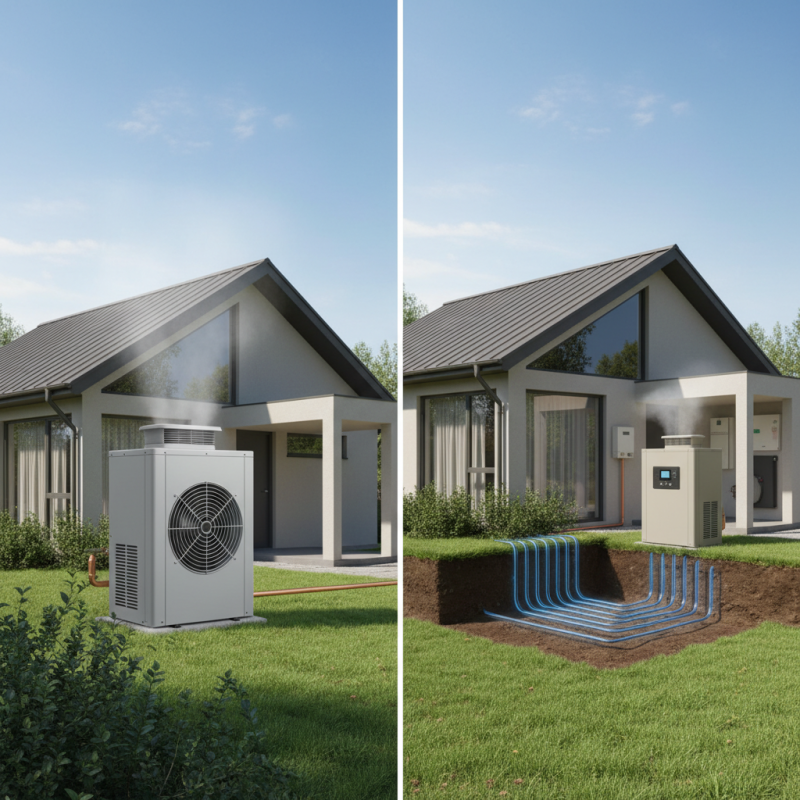
Top 5 Differences Between Air Source and Ground Source Heat Pumps?

Definition and Overview of Air Source Heat Pumps

Air source heat pumps (ASHPs) are innovative systems that transfer heat from the outside air to heat your home. They extract thermal energy even in cooler temperatures. This unique ability leads to lower energy bills and an overall reduced carbon footprint.

The design of ASHPs is relatively simpler compared to ground source systems. They typically consist of an outdoor unit and an indoor unit. The outdoor unit collects air, while the indoor unit distributes warmth. Installation is often less invasive than digging up the ground, making ASHPs appealing for many homeowners. However, efficiency can drop in extreme cold.

Weather variations impact ASHP performance. In areas with fluctuating temperatures, it may struggle to maintain consistent heating. Consider this before making a decision. While they are cost-effective and greener, regular maintenance is essential to ensure optimal performance. Understanding these aspects can guide you in evaluating the best heating solution for your needs.

Top 5 Differences Between Air Source and Ground Source Heat Pumps

Criteria Air Source Heat Pumps Ground Source Heat Pumps
Initial Cost Lower initial investment Higher initial investment due to ground work
Installation Complexity Easier installation, no ground excavation required More complex, requires drilling and excavation
Efficiency Good efficiency, but varies with outside temperature Consistent high efficiency regardless of outdoor temp
Space Requirements Less space required; installed outside the building More space needed for ground loops, typically in yards
Lifespan Typically lasts 15-20 years Can last 25 years or more with proper maintenance

Definition and Overview of Ground Source Heat Pumps

Ground source heat pumps (GSHPs) utilize the stable temperature of the earth for heating and cooling. These systems extract heat from the ground during winter and dissipate it back during summer. According to a report from the International Energy Agency (IEA), GSHPs are noted for their efficiency, boasting a coefficient of performance (COP) that often exceeds 4.0. This means for every unit of electricity consumed, more than four units of heat are produced.

Installation complexity can be a concern. Ground loops require significant land space and careful planning, often leading to higher upfront costs. A 2021 study by the U.S. Department of Energy highlights that while the initial investment might deter some, the long-term savings are substantial. Users can expect significant reductions in energy bills, which often offset installation expenses over time.

Despite these advantages, potential downsides exist. Environmental factors, such as soil composition and available land, may impact performance. Additionally, GSHPs rely heavily on proper design and installation. Errors in these phases can lead to inefficiencies or increased operational costs. Therefore, seeking guidance from experienced professionals is crucial.

Top 5 Differences Between Air Source and Ground Source Heat Pumps

This chart illustrates the key differences between Air Source Heat Pumps (ASHP) and Ground Source Heat Pumps (GSHP) based on efficiency, initial cost, maintenance cost, environmental impact, and lifespan.

Key Performance Metrics: Efficiency and Capacity Comparison

When comparing air source (ASHP) and ground source heat pumps (GSHP), efficiency and capacity are crucial metrics. According to the U.S. Department of Energy, ASHPs typically achieve a seasonal energy efficiency ratio (SEER) of 14 to 16. In contrast, GSHPs can achieve a coefficient of performance (COP) of 3 to 5. This means that for every unit of energy consumed, GSHPs can transfer three to five units of heat, showcasing their high efficiency.

While ASHPs are easier to install and can provide cooling in summer, their efficiency drops in colder temperatures. GSHPs maintain stable performance year-round, as they leverage the consistent temperature of the ground. A report from the International Energy Agency indicates that with proper installation, GSHPs can reduce heating and cooling costs by 30% compared to ASHPs.

Tips: Consider the local climate when choosing a system. In colder regions, GSHPs may offer more reliable performance. It's essential to evaluate your property’s insulation and size to maximize efficiency. Balancing cost and efficiency is key to making the right decision.

Installation Process: Requirements for Air vs. Ground Source Systems

The installation process for air source and ground source heat pumps differs significantly. Air source systems are simpler to install. They require less site preparation, minimizing disruptions. Typically, homeowners may need to clear some outdoor space for the unit. Installation is also quicker, often taking just a few days. This process is ideal for urban settings where space may be limited.

In contrast, ground source heat pumps demand extensive excavation. A geothermal loop needs to be buried deep in the ground, increasing labor and costs. According to the International Ground Source Heat Pump Association, installation can take weeks to complete. This makes it less practical for areas with challenging soil conditions or high-density housing. The upfront investment can be higher, but the savings on energy bills can be substantial over time.

Tips: Assess local soil conditions before deciding. This can impact the feasibility of ground source systems. Consider long-term energy savings versus initial installation costs. Sometimes, choosing the right system isn’t about immediate benefits but long-term value. Always consult with professionals to evaluate your specific needs.

Cost Analysis: Initial Investment and Long-Term Savings Comparison

When considering heat pumps, cost analysis is crucial in decision-making. Air source heat pumps typically have lower initial costs. Installation can be simpler and often requires less excavation. Industry reports suggest that homeowners can expect to pay around $3,500 to $8,000 for air source systems, including installation.

In contrast, ground source heat pumps have a higher upfront investment. Installation can range from $10,000 to $30,000. This cost results from extensive site work and complex drilling. However, these systems often lead to significant long-term savings. Ground source heat pumps usually offer higher efficiency. They can operate effectively year-round, resulting in lower energy bills. Research indicates that users can save 30% to 60% on energy costs over time.

While air source systems can indeed have lower initial costs, they may not provide the same savings. Seasonal performance variations can affect efficiency. In colder climates, energy costs may rise. Choosing between these systems requires careful thought. Evaluating both initial and long-term costs is essential for informed decisions.

FAQS

: What are air source heat pumps?

: Air source heat pumps transfer heat from outside air to heat homes. They work well even in cool temperatures.

How do air source heat pumps work?

They consist of an outdoor unit that collects air and an indoor unit that distributes warmth.

What is the installation process like for air source heat pumps?

Installation is less invasive than ground systems. It typically requires minimal excavation work.

What factors impact the efficiency of air source heat pumps?

Weather variations can affect performance. They may struggle in extreme cold or fluctuating temperatures.

What are the initial costs of air source heat pumps?

Homeowners can expect to pay between $3,500 and $8,000 for air source systems, including installation.

How do air source heat pumps compare to ground source systems?

Ground source systems have higher initial costs, ranging from $10,000 to $30,000, due to complex installation.

What are the long-term savings of using heat pumps?

Ground source systems can lead to 30% to 60% savings on energy bills over time, while air source systems may vary in savings.

Why is maintenance important for air source heat pumps?

Regular maintenance ensures optimal performance and can help avoid efficiency drops in colder climates.

Can air source heat pumps work in all climates?

They may struggle in very cold areas and performance can vary with seasonal changes.

What should homeowners consider before choosing a heat pump?

Evaluate both initial costs and long-term efficiency, as conditions vary depending on climate and usage patterns.

Conclusion

In exploring what is the difference between air source and ground source heat pumps, it's essential to understand both systems' definitions and functionalities. Air source heat pumps extract heat from the outside air, making them generally easier and less expensive to install. In contrast, ground source heat pumps, or geothermal systems, utilize the stable temperatures beneath the earth's surface, offering enhanced efficiency but requiring more extensive installation processes.

Key performance metrics highlight efficiency and capacity, showing that ground source systems typically outperform air source models in efficiency over time. However, the initial installation costs for ground source systems are usually higher. Cost analysis reveals that while air source heat pumps may require lower upfront investments, ground source systems can yield more significant long-term savings due to their greater energy efficiency. Understanding these distinctions aids in making informed decisions based on specific heating and cooling needs.

Isabella

Isabella

Isabella is a dedicated marketing professional with a sharp focus on driving brand growth and engagement through strategic content creation. With an extensive background in digital marketing, she combines her passion for storytelling with her keen understanding of industry trends to deliver......