As the demand for sustainable heating solutions rises, understanding heat pump systems becomes essential. Many are questioning, "what is the difference between monoblock and split heat pumps?" Industry reports indicate that heat pumps can reduce energy consumption by up to 50% compared to traditional heating methods. Monoblock and split systems each offer unique advantages and challenges that affect overall efficiency and installation.
Monoblock heat pumps are compact solutions, with all components housed in one unit. This design simplifies installation and maintenance. Conversely, split heat pumps consist of two units: one indoors and one outdoors. This separation can optimize noise reduction and enhance aesthetic appeal. Data from energy authorities shows that split systems often operate at a higher efficiency in various climates, but they can involve more complex installation procedures.
Choosing between these systems requires careful consideration. Factors like space, climate, and energy needs play critical roles in decision-making. Some users may favor the straightforward installation of a monoblock unit, while others could benefit from the performance capabilities of a split system. Understanding these key differences is crucial for homeowners and businesses alike, as they make informed decisions on heating solutions.
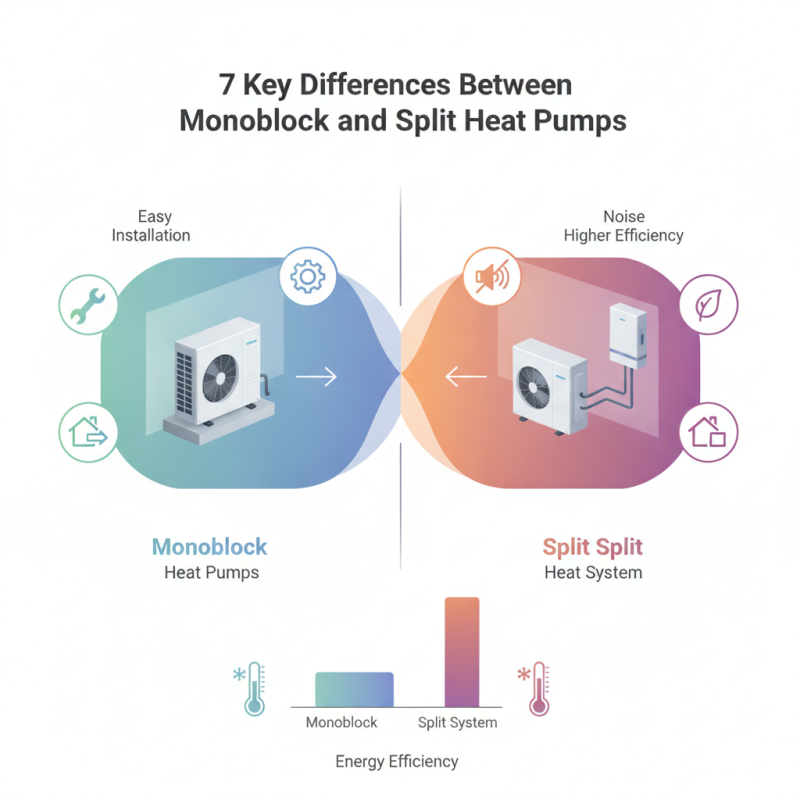
Monoblock heat pumps are self-contained units. They are designed for easy installation and efficiency. A monoblock system contains all essential components in one casing. This makes it simpler to set up compared to split systems, which have indoor and outdoor components.
These heat pumps use refrigerant to absorb heat from outside. They can effectively heat or cool a space. The design is suitable for smaller installations or homes with limited outdoor space. Many users appreciate the low noise levels of monoblock units. Yet, some concerns exist regarding their performance in extremely cold climates. They may require supplemental heating during harsh winters.
Tip: If you are considering a monoblock heat pump, assess your local climate. A unit designed for warmer areas may struggle in cold conditions.
Another aspect to weigh is efficiency. Monoblock systems typically offer high energy efficiency ratings. However, they may lack the flexibility of split systems. Users might find it challenging to repair or upgrade a monoblock system independently. Consider maintenance issues when making your choice.
Tip: Always consult with a professional before making a decision. A qualified technician can evaluate your needs and advise you on the most suitable system.
Split heat pumps are a popular choice for temperature regulation in residential and commercial spaces. They typically consist of two main components: an indoor unit and an outdoor unit. This design allows flexibility in installation. The outdoor unit handles heat exchange with the environment, while the indoor unit distributes warm or cool air inside.
One key characteristic of split heat pumps is their efficiency. They can provide both heating and cooling, depending on the season. This dual functionality makes them versatile. However, placement can be tricky. Improper positioning of the outdoor unit can lead to performance issues. Maintenance is another important aspect. Regular cleaning and checks are essential for optimal operation.
Despite their advantages, split heat pumps have limitations. They can be noisy, especially the outdoor unit during peak operation. Some users find the installation process complex and costly. Understanding these factors can lead to better decision-making when choosing a heating and cooling solution.
This chart displays the key differences in efficiency, noise level, installation cost, and maintenance between Monoblock and Split Heat Pumps.
When considering installation processes for monoblock and split heat pumps, it's essential to understand their distinct requirements.
Monoblock units are all-in-one systems. They require less indoor space. Their installation is straightforward. Just place them outside and connect power and plumbing. This simplicity is often appealing for homeowners. However, it limits flexibility in placement.
In contrast, split heat pumps consist of two units: indoor and outdoor. The outdoor unit is connected to the indoor unit via refrigerant lines. This setup allows for more placement options, which can be beneficial in maximizing energy efficiency. However, the installation process can be more complex. It often necessitates professional help. Accessing and securing both units may lead to higher installation costs.
Tip: Choose the installation method that fits your property layout. Consider hiring an experienced technician to avoid complications.
Site preparation is also critical. Ensure the outdoor space is clear and level. For split systems, plan for adequate access to both units. Improper installation can result in inefficiency and higher energy bills.
Tip: Regular maintenance is key for both systems. Scheduling annual checks can prevent major issues.
When comparing monoblock and split heat pumps, energy efficiency becomes a crucial factor. Monoblock systems integrate all components into one unit. This design can offer a compact solution with simpler installation. They often work well in milder climates, providing sufficient heating and cooling without excessive energy consumption. However, their efficiency may drop in extreme temperatures.
On the other hand, split heat pumps consist of two separate units. One is outside, while the other is inside. This separation allows for better performance in diverse climates. They tend to be more efficient in larger spaces. Additionally, maintenance can be easier since components are spread out. Yet, their installation can be complex, potentially raising costs. Each type comes with its trade-offs. It's important to consider individual needs and local climate when choosing between them. Balancing performance, efficiency, and ease of use is key.
| Feature | Monoblock Heat Pump | Split Heat Pump |
|---|---|---|
| Installation Complexity | Simpler, can be installed without refrigerant handling | More complex, requires refrigerant piping installation |
| Space Requirement | Requires more outdoor space for unit | Compact, can be installed in limited outdoor space |
| Noise Level | Generally quieter, all components in one unit | May be noisier, as outdoor compressor is separate |
| Heat Output Efficiency | Good efficiency, but can be limited in very low temps | Higher efficiency, better at low temperatures with proper sizing |
| Maintenance | Easier access for maintenance as single unit | More complex maintenance due to separate units |
| Initial Cost | Lower initial cost due to simpler installation | Higher initial cost owing to split system components |
| Aesthetics | Bulkier appearance, as everything is housed in one unit | More visually appealing as components can be hidden |
When considering heat pumps, cost is a significant factor. Monoblock and split systems differ in initial investment. Monoblock heat pumps are often less expensive upfront. They come as a single unit, which can simplify installation. However, this lower cost might lead to higher operational expenses later. Due to their design, they may not be as energy-efficient as split systems.
On the flip side, split heat pumps tend to require a higher initial investment. The separate indoor and outdoor units can add to installation costs. Yet, they often provide greater energy efficiency. This can result in lower energy bills over time. The long-term savings are an essential consideration. While the upfront cost is a hurdle, the continuous savings could offset that investment.
Evaluating both options is crucial, as unexpected costs can arise with both systems. It's important to weigh the initial costs against potential future savings.
: Monoblock heat pumps are self-contained units, combining all essential components in one casing.
They use refrigerant to absorb heat from outside, effectively heating or cooling a space.
They are easier to install due to their all-in-one design, especially in smaller spaces.
Yes, they may struggle in extremely cold climates and might need supplemental heating.
Monoblock units may be efficient in mild climates, but their performance can drop in extreme temperatures.
Monoblock systems can be challenging to repair independently compared to split systems.
Monoblock systems often have lower upfront costs but might lead to higher operational expenses later.
Yes, split systems may require a higher initial investment but can offer greater energy savings over time.
Yes, consulting a technician can help evaluate your needs and system suitability.
Each system has its benefits and drawbacks, impacting efficiency, installation complexity, and long-term costs.
The article "7 Key Differences Between Monoblock and Split Heat Pumps" explores the fundamental distinctions between these two heating systems. Monoblock heat pumps are characterized by their all-in-one design, simplifying installation as all components are housed in a single unit. In contrast, split heat pumps consist of separate indoor and outdoor units, which may offer flexibility in placement but can involve a more complex installation process.
Additionally, the article delves into energy efficiency, highlighting how both systems perform under various conditions, and compares the initial costs and long-term savings associated with each. Understanding these differences helps consumers make informed decisions regarding what is the difference between monoblock and split heat pumps, based on their specific heating needs and installation environments.

PeakWay Pump