7 Best Monoblock vs Split Heat Pumps What Is the Difference?

Time:2026-11-11 Author:Mason
0%

Choosing between these systems starts with a practical question: what is the difference between monoblock and split heat pumps, and how will that difference affect your home? A monoblock keeps the refrigerant circuit in one outdoor unit. Water pipes connect it to the heating system indoors. A split model places part of the refrigerant circuit inside, linking the outdoor and indoor units with refrigerant lines. That distinction changes installation details, servicing needs, and the risks to consider in cold weather.

John Siegenthaler, P.E., a hydronic-system design specialist, has long emphasized careful system design. A fair paraphrase of his guidance is: “Match the equipment to the building’s heating load and the distribution system.” It is a useful principle, not a verbatim quotation. A well-sized unit can still disappoint if its controls, radiators, or underfloor loops are poorly matched. Small details matter. Think of pipe insulation beside an exposed outdoor wall, or the space needed to service an indoor module. This guide compares seven key differences, including installation, efficiency, maintenance, noise, and freezing protection. It also explains where each configuration may suit a home—and where it may not. There is no universal winner. Product design, climate, installer experience, and the building itself all matter. Some comparisons look tidy on paper; real installations can be messier. That is worth remembering before choosing.
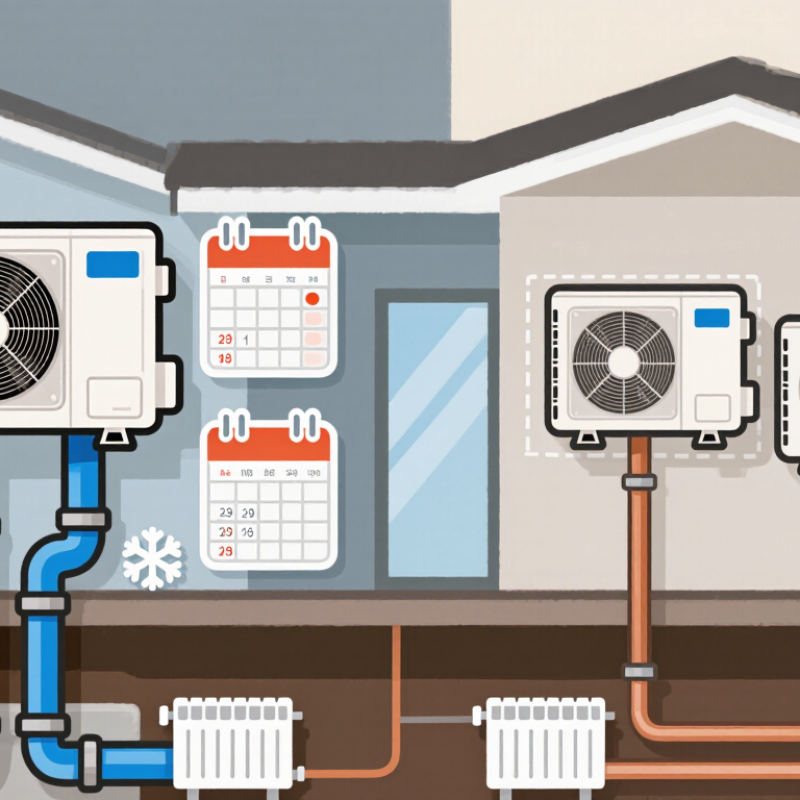
7 Best Monoblock vs Split Heat Pumps What Is the Difference?

What Monoblock and Split Heat Pumps Are

A monoblock heat pump keeps its refrigerant circuit inside one outdoor cabinet. It transfers heat to the home through water pipes that connect to radiators, underfloor heating, or a hot-water cylinder. Picture a single unit beside the house, with insulated pipes entering through the wall. Because water pipes run outdoors, installers need to consider freezing risk and pipe insulation.

A split heat pump has an outdoor unit and an indoor unit. Refrigerant travels between them through insulated pipes; the indoor unit then transfers heat to the home’s water system.

The IEA’s 2022 report says heat pumps can be three to five times more energy-efficient than gas boilers, though actual performance depends on climate, equipment, and system design. That figure describes heat pumps broadly, not one configuration as universally better. The labels can be confusing.

Tips: Ask where the refrigerant circuit sits, what pipes enter the house, and how outdoor pipework is protected in cold weather. Check the proposed layout against your heating system and local conditions. A neat diagram helps.

How Monoblock and Split Heat Pumps Work

A monoblock heat pump keeps its refrigerant circuit inside one outdoor cabinet. A fan draws outdoor air across a coil, where refrigerant absorbs heat and evaporates. The compressor raises its pressure and temperature. A heat exchanger then transfers that heat to water for radiators, underfloor heating, or a hot-water cylinder. The water travels between the outdoor unit and the home. The loop is simple.

A split system divides the equipment between outdoor and indoor units. Refrigerant travels through insulated pipes between them, carrying heat to an indoor heat exchanger. There, heat passes into the home’s water circuit. This means water pipes generally stay indoors, while refrigerant lines cross the wall. It sounds neat, but the pipe route and installation details matter. Both types need electricity to run the compressor and may reverse their cycle briefly to defrost the outdoor coil in cold, damp weather. A monoblock’s outdoor water pipes need careful insulation and freeze protection; split systems need correctly installed refrigerant connections. The exact layout varies by home, so checking the manufacturer’s technical guidance and getting a qualified assessment are sensible steps.

7 Best Monoblock vs Split Heat Pumps: What Is the Difference? — How Monoblock and Split Heat Pumps Work

Comparison Monoblock Heat Pump Split Heat Pump
1. How it works The refrigerant circuit is contained within the outdoor unit. Heat is transferred to water in that unit, and the heated water travels indoors to the heating system. The outdoor unit absorbs heat from the air. Refrigerant travels through insulated pipes to an indoor unit, where heat is transferred to the water-based heating system.
2. What connects the units Water pipes connect the outdoor unit to indoor heating equipment, such as radiators, underfloor heating, or a hot-water cylinder. Refrigerant pipes connect the outdoor unit to the indoor unit. Water pipes then connect the indoor unit to the heating system.
3. Freeze protection Because water pipes run outdoors, they need suitable protection against freezing. Measures may include insulation, antifreeze, or a system designed to prevent freezing during a power outage. Water generally remains indoors, so less of the water circuit is exposed to outdoor freezing conditions. The outdoor refrigerant lines still need correct installation and insulation.
4. Refrigerant installation The refrigerant circuit is typically factory sealed, so installation usually involves water and electrical connections rather than on-site refrigerant pipework. Refrigerant pipework is installed between the outdoor and indoor units. Connecting and commissioning it requires appropriately qualified personnel and must follow local regulations.
5. Indoor equipment and space It may require fewer indoor components, but indoor pipework, controls, and any required hot-water cylinder still need space. It requires an indoor hydro unit or equivalent equipment, as well as space for pipe connections and any hot-water cylinder.
6. Efficiency and performance Performance depends on the specific system, outdoor temperature, flow temperature, sizing, and installation. The monoblock design alone does not determine efficiency. Performance also depends on the specific system, operating conditions, sizing, and installation. A split design is not automatically more or less efficient than a monoblock.
7. Best fit to consider May suit a project where a compact outdoor unit and straightforward refrigerant installation are priorities, provided outdoor water-pipe protection can be designed appropriately. May suit a project where keeping the water circuit indoors is a priority and qualified refrigerant-pipe installation is readily available.

Note: Both configurations can provide space heating and, when designed with suitable equipment, domestic hot water. Check the system design, climate, local installation rules, and manufacturer specifications for the property.

How Installation, Efficiency, Noise, and Maintenance Compare

Installation is the clearest difference. A monoblock keeps the refrigerant circuit outdoors, so water pipes pass through the wall into the home. A split system sends refrigerant lines indoors to a separate hydro unit. That can reduce exposed water piping, but installation needs careful refrigerant-line routing. In either layout, pipe insulation and a clear condensate drain matter on a cold, wet morning.

Efficiency is not decided by the casing. Correct sizing, outdoor temperature, and water temperature all affect real-world performance. The U.S. Department of Energy says heat pumps can reduce electricity use for heating by up to 75% compared with electric resistance heating; that figure is not a monoblock-versus-split comparison. Lower flow temperatures often help either design. But poorly balanced radiators can erase some of the expected gain.

Noise and upkeep deserve a house-level check. Both types have an outdoor fan and compressor, so placement near a bedroom window can be noticeable. A split system also has indoor equipment that may produce pump noise; a monoblock may need extra attention to exposed water lines during freezing weather. Keep filters, strainers, and outdoor coils clear. The IEA’s 2022 report, The Future of Heat Pumps, emphasizes that performance depends on installation quality and operating conditions. That’s easy to overlook. A neat-looking unit is not proof of a quiet or efficient system.

Seven Monoblock and Split Heat Pumps Worth Comparing

A useful comparison starts with the installation, not a headline efficiency figure. Monoblock systems keep the refrigerant circuit outdoors; split systems connect outdoor and indoor units with refrigerant lines. Compare seven practical candidates: a standard monoblock for simple layouts, a cold-climate monoblock, a monoblock with an integrated hot-water cylinder, a high-temperature monoblock, a compact split for tight utility rooms, a standard split for flexible placement, and a high-temperature split for older radiator systems. These are system types, not guaranteed winners.

The U.S. Department of Energy’s Energy Saver guidance says air-source heat pumps can reduce heating electricity use by about 50% compared with electric-resistance heating. Actual results depend on climate, sizing, controls, and the existing heating system. Ask installers for design-temperature capacity, sound levels, seasonal efficiency, and backup-heater assumptions. A low outdoor temperature can change the comparison quickly. I would not rank models from brochure figures alone; measured household performance is less tidy than that.

Tips: Check where water pipes run on a monoblock, since exposed sections need freeze protection. For a split, confirm who handles refrigerant connections and service. Compare installed quotes, not just unit prices. Even a neat spec sheet can miss a cramped plant room.

Monoblock vs Split Heat Pumps: Key Differences

This chart compares typical system layouts. In a monoblock system, the refrigerant circuit is contained in the outdoor unit, and water pipes connect it to the indoor heating system. In a split system, refrigerant lines connect the outdoor unit to an indoor hydrobox. Actual equipment configurations can vary.

How to Choose the Right Heat Pump Type

Choosing between a monoblock and a split heat pump starts with your home, not a product label. A monoblock keeps the refrigerant circuit outdoors, with water pipes connecting the unit to the heating system. It can simplify indoor equipment, but those pipes need careful insulation and freeze protection in cold weather. A split system has indoor and outdoor units joined by refrigerant lines. It may reduce water pipework outside, though installation requires suitable refrigerant expertise and space indoors.

Neither type is automatically more efficient. Performance depends on correct sizing, local temperatures, insulation, and the water temperature your radiators or underfloor heating need. Check where outdoor noise might reach a bedroom or neighbor, and ask how servicing access will work. A neat installation matters; a small detail, like a long exposed pipe run, can become an annoyance. I would not decide from headline efficiency figures alone.

Tips: Ask installers to explain the cold-weather protection plan, expected running temperatures, and likely maintenance needs. Measure the available indoor and outdoor space before requesting quotes. If two proposals differ, compare their assumptions about insulation and heat loss—not just the equipment price.

FAQS

What is the main difference between monoblock and split heat pumps?

A monoblock keeps its refrigerant circuit outdoors and connects to the home with water pipes. A split system uses indoor and outdoor units joined by refrigerant lines.

Does one heat pump type always use less energy?

No. Efficiency depends on sizing, local temperatures, insulation, controls, and required water temperature. Brochure figures alone can mislead.

What should I check before installing a monoblock system?

Check where the water pipes will run. Exposed sections need insulation and freeze protection, especially in cold weather.

What does a split heat pump need indoors?

It needs room for its indoor unit and suitable refrigerant-line installation. Confirm who will handle those connections and future servicing.

Which heat pump types are worth comparing?

Compare standard, cold-climate, integrated hot-water, and high-temperature monoblocks. Also consider compact, standard, and high-temperature split systems.

Can a high-temperature system suit older radiators?

It may be worth comparing for an older radiator system. Ask installers about design-temperature capacity and expected running temperatures.

What details should I ask installers about?

Ask about capacity at low outdoor temperatures, sound levels, seasonal efficiency, backup-heater assumptions, and maintenance access. Small details matter.

How should I compare installation quotes?

Compare installed prices and the assumptions behind each proposal, including insulation and heat loss. I still find headline figures tempting, but they do not tell the whole story.

Conclusion

This guide explains what monoblock and split heat pumps are, how each system moves heat, and what is the difference between monoblock and split heat pumps in everyday use. It compares their installation requirements, energy efficiency, operating noise, and maintenance needs, highlighting how home layout, climate, available space, and installer expertise can affect the best choice. It also outlines seven types of systems worth comparing, focusing on practical features rather than brand names.

Choosing between the two depends on more than headline efficiency. A monoblock system keeps its main components together outdoors, while a split system connects outdoor and indoor units, so each may suit different properties and installation conditions. Consider the space available, sound levels near living areas, maintenance access, and the system’s performance in local temperatures. Comparing these factors can help homeowners select a heat pump type that fits their home, comfort needs, and long-term plans.

Mason

Mason

Mason is a seasoned marketing professional with a deep expertise in the company's offerings and a passion for driving brand awareness. With a strong background in digital marketing strategies, he has an innate ability to connect with diverse audiences and effectively communicate product benefits.......