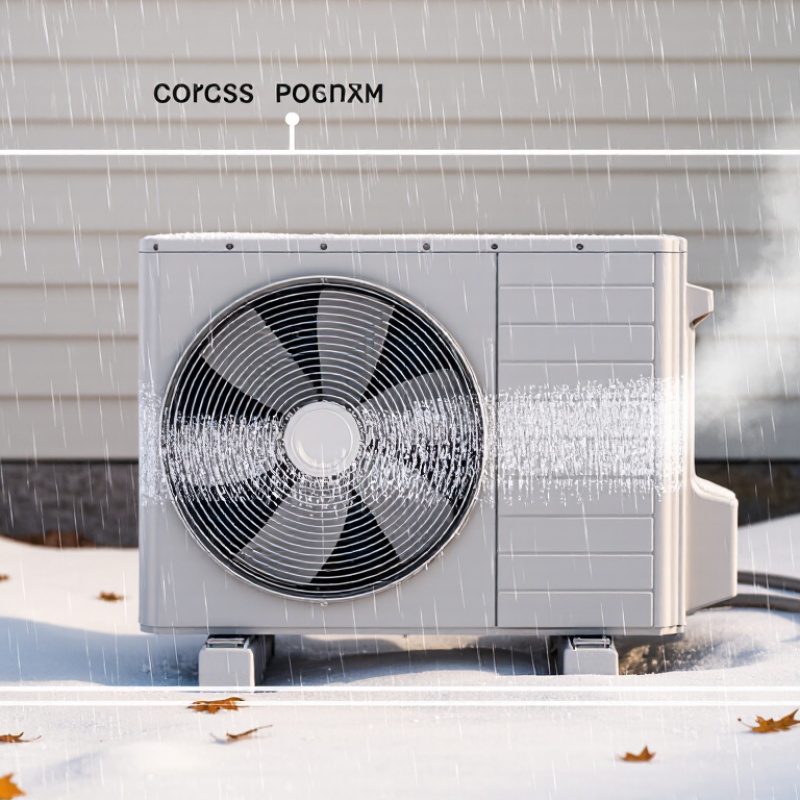
| Light frost on the outdoor coil |
Light frost can form during cold, damp weather because the outdoor coil operates below the outdoor air temperature. |
Allow the heat pump's automatic defrost cycle to operate. Keep the outdoor unit clear of leaves, snow, and other obstructions. |
The frost becomes a thick, solid layer, covers most of the coil, or does not clear after repeated normal operation. |
| Automatic defrost cycle begins |
The outdoor fan may stop, the system may briefly change operating sounds, and cool air or steam may appear outdoors while ice melts. |
Do not interrupt the cycle. Keep people, pets, and objects away from the outdoor fan and coil. |
The system repeatedly enters defrost, remains in defrost unusually long, or fails to return to normal heating. |
| Snow around the outdoor unit |
Snow can accumulate around the cabinet, but blocked airflow can reduce heating performance and contribute to icing. |
Turn off power only if required by the equipment instructions, then gently remove loose snow with a soft brush or by hand. Maintain clear airflow around the unit. |
Snow or ice is packed inside the cabinet, the coil is damaged, or safe access is not possible. |
| Solid ice on the coil or base pan |
A small amount of frost may be normal; a heavy ice layer is not normal because it restricts airflow and heat transfer. |
Switch the system off if the unit is heavily iced and arrange professional service. Keep drains and the surrounding area clear. |
Do not chip the ice, pour boiling water on the unit, use an open flame, or apply chemical de-icers. Request qualified diagnosis. |
| Heat pump runs but indoor air feels cool |
Air from a heat pump may feel less hot than air from a combustion furnace, especially during cold weather. |
Check that the thermostat is set to heating, the air filter is clean, and supply and return vents are open. |
Indoor temperature continues to fall, airflow is weak, or the system produces abnormal noise or odor. |
| Outdoor unit makes unusual sounds |
Temporary clicks, valve sounds, or changes in airflow can occur during a normal defrost cycle. |
Observe from a safe distance and note when the sound occurs. Do not remove panels or reach into the unit. |
Grinding, loud banging, persistent rattling, electrical buzzing, or fan contact with ice requires professional inspection. |
| Water or steam appears during defrost |
Meltwater and visible steam can occur when the system removes frost from the outdoor coil. |
Make sure meltwater can drain away from the unit and does not refreeze into a large ice buildup. |
The base pan repeatedly freezes solid, water cannot drain, or ice threatens the fan or coil. |
| Air filter condition |
A clean filter supports proper indoor airflow; a dirty filter can reduce performance and increase system stress. |
Inspect the filter and replace or clean it according to the equipment instructions and filter type. |
The system still has poor airflow after filter maintenance, or the indoor coil shows signs of icing. |
| Refrigerant or electrical concern |
These issues cannot be reliably confirmed through visual inspection alone. |
Turn the system off if it is unsafe, and avoid opening panels or handling wiring and refrigerant components. |
Any suspected refrigerant leak, repeated circuit-breaker trip, burning smell, exposed wire, or electrical fault requires prompt professional service. |
| Emergency safety warning |
A heat pump should not create conditions that threaten people, property, or electrical safety. |
Shut off power only when it can be done safely, keep clear of the equipment, and follow local emergency procedures. |
Smoke, fire, a strong burning odor, sparking, exposed live wiring, or suspected carbon monoxide from another appliance requires immediate emergency action and qualified assistance. |
 PeakWay Pump