A frozen heat-pump line can turn a cold morning into a costly repair. The warning signs may be small: a thin ice sleeve, a weak trickle, or a pump that runs without warming the home. Knowing how to prevent heat pump pipes from freezing starts with understanding where the vulnerable sections sit. Outdoor connections, exposed plumbing, and poorly insulated runs deserve close attention before temperatures plunge.
The U.S. Department of Energy reports that heat pumps can reduce electricity use for heating by about 50% compared with electric resistance heating. That efficiency depends on a system that can operate safely in winter. Keep pipes insulated, maintain clear airflow around the outdoor unit, and follow the manufacturer’s guidance for drainage and cold-weather operation. Check the system after storms, too. Snow can hide blocked drains or packed ice. Small checks matter.
A thoughtful prevention plan also includes knowing when to call a qualified HVAC technician. Repeated icing, unusual noises, or a sudden loss of heat need professional assessment, not guesswork. No source text was supplied to verify a named expert’s exact words, so I won’t invent a quotation. Reliable advice should be traceable. The tips ahead focus on practical checks, clear warning signs, and steps that help protect heat-pump pipes through freezing weather.
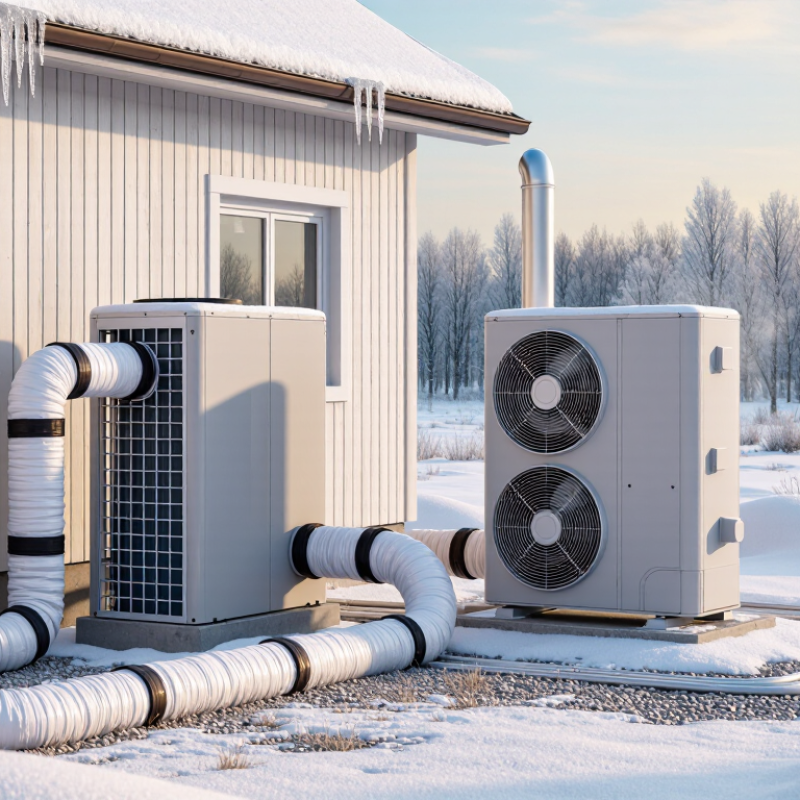
Walk around the outdoor unit and trace any water-carrying pipes you can safely see. Check where they enter the house, pass through a crawlspace, or cross an unheated garage. Look for bare sections, cracked insulation, loose joints, and small gaps near wall openings. Cold air can reach a pipe through a surprisingly narrow opening. A quick glance is not enough.
Water freezes at 32°F (0°C), but the forecast alone may not show how cold a pipe gets. Wind, shade, and several hours of freezing weather can chill an exposed section faster than a sheltered one. If possible, place a simple thermometer near the pipe overnight; avoid relying on a reading indoors. Not every visible tube carries water. Refrigerant lines are sealed parts of the system, so do not cut, bend, or disconnect them. If you cannot tell which pipes carry water, ask a qualified heating professional to identify them. It is easy to overlook one short, uninsulated stretch behind the unit—that detail deserves a second look.
Heat-pump piping is not one uniform system. Outdoor refrigerant lines, hydronic supply pipes, and condensate drains face different freeze risks and code requirements. Check which IPC and IECC editions your jurisdiction has adopted; local amendments can change the rules. Neither code should be treated as a universal insulation chart. The IPC may address plumbing installation and protection, while IECC provisions can depend on pipe use, location, and climate zone. Ask the local building department or a qualified installer to confirm the applicable requirements before choosing insulation thickness. Keep the answer in writing when possible. Details matter.
Select insulation rated for the pipe’s temperature range, outdoor exposure, and moisture conditions. For refrigerant lines, follow equipment instructions and the system design; insulation thickness alone cannot fix a poor installation. For hydronic piping near an exterior wall, use code-compliant insulation and seal gaps where cold air enters. Protect insulation from rain, sunlight, and physical damage with suitable jacketing. Condensate drains need the right slope and freeze strategy, not just a foam sleeve. Small gaps matter. Inspect elbows, valves, supports, and wall penetrations; these spots are often missed. A tight cover can still trap water underneath, so inspect seams after wet weather. Local requirements and site conditions sometimes leave judgment calls; document the material, thickness, and code basis for future service.
Top Tips to Prevent Heat Pump Pipes from Freezing
Maintain a 55°F Minimum Indoor Setpoint During Extended Absences
When leaving home during freezing weather, keep the thermostat at 55°F (about 13°C) or higher. The American Red Cross recommends this minimum to help protect household pipes. A lower setting may save some energy, but pipes in exterior walls, crawlspaces, or garages can become much colder than the thermostat area. Small detail. It matters.
Heat pumps need steady operation during cold spells, so avoid deep temperature setbacks while you are away. Open cabinet doors beneath sinks on exterior walls, and keep interior doors open so warm air can reach colder rooms. A thermostat reading is not a pipe reading. If your system has remote monitoring, set an alert for indoor temperatures below 55°F; check that it works before traveling. The U.S. Environmental Protection Agency’s WaterSense leak guidance says a faucet dripping once per second can waste more than 3,000 gallons a year. A small leak can become harder to spot when nobody is home. The 55°F setting is a useful baseline, not a guarantee; poorly insulated pipe runs may need additional protection.
Suggested indoor thermostat settings for different occupancy situations
Key takeaway: During extended absences, keep the indoor setpoint at 55°F or higher. These are general guide values, not a guarantee against freezing; protect exposed pipes and follow your heat pump’s operating guidance and local conditions.
Heat-trace sizing should start with the local ASHRAE winter design temperature, not a regional average or a guess based on last winter. Check which design condition suits the building and the consequences of a frozen line. A pipe serving an occupied home may need a different risk assessment from an exposed seasonal line. Local exposure matters.
Estimate heat loss using pipe diameter, insulation thickness and conductivity, the required pipe temperature, and the design temperature. Wind-exposed runs, valves, supports, and wet insulation can add significant losses. Use the calculated loss per foot to select cable output at the expected operating temperature; also verify circuit voltage, run length, and start-up current. A cable’s headline rating alone is not enough. Real installations are less tidy than calculations.
Place the temperature sensor where the pipe is likely to be coldest, often on a shaded, wind-exposed section. Follow the cable and control instructions, and have a qualified professional check electrical protection and installation details. Keep insulation continuous around fittings, without crushing the cable. Test the system before freezing weather arrives. Small gaps matter. ASHRAE design conditions are planning values, not guarantees against every cold snap, so unusually exposed pipes may deserve a more conservative review.
Outdoor heat-pump pipes can freeze when circulation stops, even if the unit still has power. Check the manufacturer’s data sheet for minimum water flow, permitted antifreeze concentration, and the lowest operating temperature. These limits vary by model; a generic setting is not a reliable substitute. ASHRAE technical guidance notes that water expands by about 9% as it freezes, enough to split a trapped pipe or damage a heat exchanger.
Verify actual flow during operation, not just the controller’s display. A partly closed valve, air pocket, dirty strainer, or weak pump can reduce circulation. If glycol is specified, use the data sheet’s concentration limits: stronger mixtures can reduce heat transfer and increase pumping resistance. Check the fluid’s freeze rating with a suitable meter, and compare it with the site’s expected minimum temperature. A reading taken on a mild day proves little.
Tip: Keep the relevant data-sheet page near the system. Before cold weather, inspect exposed pipe insulation, confirm valves are open, and test the freeze-protection settings. If measured flow falls below the stated minimum, ask a qualified technician to investigate; adding more glycol may not fix the underlying restriction.
Trace visible water-carrying pipes near the unit, crawlspace, garage, and wall openings. Look for bare sections, cracked insulation, loose joints, and narrow gaps. One short stretch can be easy to miss.
Water freezes at 32°F (0°C). Wind, shade, and hours of cold can chill exposed pipes faster than sheltered pipes. A thermometer beside the pipe overnight gives a more useful reading than an indoor display.
No. Refrigerant lines are sealed system parts; do not cut, bend, or disconnect them. If you are unsure which lines carry water, ask a qualified heating professional. Better to check twice.
Choose material rated for the pipe’s temperature range, outdoor exposure, and moisture. Follow the system instructions for refrigerant lines. Insulation thickness alone cannot correct poor installation.
No single thickness applies everywhere. Check locally adopted IPC and IECC editions, amendments, pipe use, and climate zone. Ask the building department or a qualified installer to confirm requirements. Keep the answer in writing.
Inspect elbows, valves, supports, seams, and wall penetrations. Seal gaps where cold air enters, and protect insulation from rain, sunlight, and damage. Water can hide beneath a tight cover.
Keep the indoor setpoint at 55°F (about 13°C) or higher. Open sink cabinets on exterior walls and leave interior doors open. This is a baseline, not a guarantee.
A slow drip may help in some situations, but it does not replace insulation or steady heat. A faucet dripping once per second can waste over 3,000 gallons yearly. I might still overlook a vulnerable pipe, so inspect before leaving.
Knowing how to prevent heat pump pipes from freezing starts with identifying exposed pipe sections, especially those outdoors, in crawl spaces, or near unheated walls. Water can freeze at 32°F (0°C), so protect vulnerable pipes with insulation selected to meet applicable local IPC and IECC requirements. Insulation slows heat loss but may not be enough during prolonged cold weather, so keep the indoor temperature at or above 55°F when the home will be unoccupied for an extended period.
Where heat trace is needed, choose and size it for the local winter design temperatures referenced by ASHRAE guidance, and install it according to its instructions. Check the heat pump manufacturer’s data sheet for minimum water flow, built-in freeze protection, and operating limits. Regularly confirm that circulation is maintained and that insulation and heat-trace components remain in good condition, helping reduce freeze risk while keeping the system within its specified operating range.

PeakWay Pump