Why is water source heat pump more efficient than air source? The answer begins with the temperature surrounding the heat exchanger. Air temperatures can change sharply overnight, during winter storms, or across seasonal extremes. Water temperatures usually shift more slowly. This steadier environment helps a water source heat pump maintain a smaller temperature difference during operation.
That difference matters. A smaller temperature lift often means less compressor work and more usable heat from each unit of electricity. Water also transfers heat more effectively than air because it is denser and has higher thermal conductivity. In practical terms, a water loop can collect heat through compact pipes, while an air source system may need larger coils and stronger fans. Air source equipment can also lose efficiency during defrost cycles. Water systems generally avoid that specific outdoor coil problem.
Dr. Fatih Birol, Executive Director of the International Energy Agency, has stated, “Heat pumps are a central technology in the transition to secure and sustainable heating.” His observation supports the wider energy case, but it does not make every water source installation automatically superior. That would be too simple.
Site conditions still decide the result. A poorly designed loop may require excessive pumping power. Installation can also involve drilling, permits, and difficult ground conditions. Real performance depends on flow rates, insulation, controls, and maintenance. A water source heat pump may deliver impressive seasonal efficiency, but measured results can disappoint when design assumptions are careless. This introduction examines the physics, operating costs, system limitations, and practical evidence behind the comparison. It asks a more useful question: when does water provide a meaningful efficiency advantage over air?
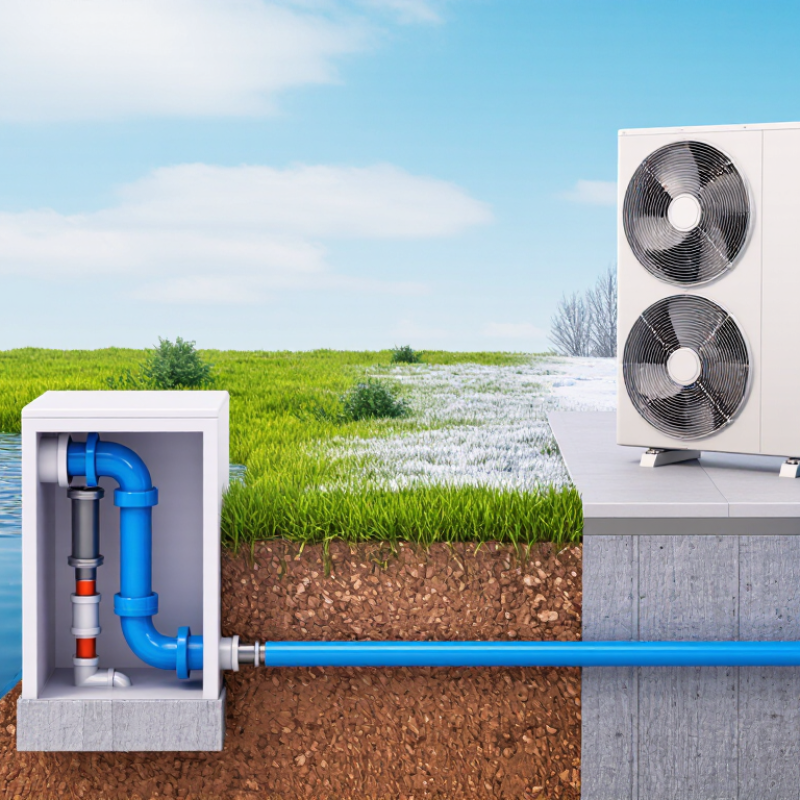
A water source heat pump moves heat through a closed water loop. A pump circulates water past a heat exchanger inside the unit. The refrigerant then absorbs or rejects heat, depending on the season. During winter, the system extracts heat from relatively stable water. The compressor raises its temperature before indoor delivery. In summer, the process reverses. Indoor heat moves into the water loop.
Water changes temperature more slowly than air. That matters on freezing mornings or hot afternoons. The U.S. Department of Energy reports that geothermal heat pumps can use 25–50% less electricity than conventional heating and cooling systems. The International Energy Agency also reports that efficient heat pumps can deliver roughly three to five units of heat for each electricity unit consumed. These figures are useful benchmarks, not guarantees. Poor flow control, fouled heat exchangers, or undersized piping can reduce performance. Real buildings are messier.
Tips: Check entering-water temperature, loop pressure, and filter condition during commissioning. Ask for measured COP or seasonal efficiency, not only catalogue claims. ASHRAE guidance supports water-loop testing and balanced flow. A technician should record supply and return temperatures. Small errors become expensive over time.
A water source heat pump often works more efficiently because water holds heat more consistently than outdoor air. Air temperatures can change sharply between a cold morning and a sunny afternoon. Water changes more slowly. That steadiness gives the heat pump a calmer operating environment.
Water also carries more heat in a smaller volume than air. A buried loop, pond circuit, or suitable well system can transfer energy with less temperature fluctuation. During winter, the system avoids some of the extreme conditions that make air source equipment work harder. It may also reduce frequent defrost cycles, which can temporarily reverse normal heating operation.
Technicians usually check loop temperature, water flow, and heat exchanger cleanliness during commissioning. These details matter. A stable water source cannot rescue poor design. A clogged filter, weak circulation pump, or undersized loop can reduce efficiency quickly. Poor flow changes everything.
The comparison is not completely one-sided. Installing underground piping may require more planning and higher initial labor. Local soil, groundwater conditions, and maintenance access also affect performance. Still, when the loop is correctly sized and balanced, water provides a steadier path for heat transfer. The benefit feels practical: fewer sharp temperature swings, smoother compressor operation, and more predictable indoor comfort. The system is efficient, but never maintenance-proof.
The U.S. Department of Energy reports that geothermal heat pumps can use 25–50% less energy than conventional heating and cooling systems. Water source designs benefit from a similar principle: heat transfers through a stable water loop instead of highly variable outdoor air. In winter, a cold air-source system may need defrost cycles and electric backup heat. A water loop usually avoids these severe temperature swings. In summer, cooler water also helps the system reject indoor heat with less compressor effort.
ASHRAE’s HVAC Systems and Equipment Handbook explains that heat pump efficiency depends strongly on entering water temperature and flow control. Small changes matter. A steady loop can keep compressor lift lower, improving the coefficient of performance. The U.S. Environmental Protection Agency also identifies geothermal systems as a high-efficiency option because underground temperatures remain relatively stable.
A water source heat pump often performs better because water changes temperature more slowly than outdoor air. This creates a steadier heat exchange environment. On a cold morning, air source equipment may lose efficiency during defrost cycles. Water source systems usually face fewer interruptions. The difference can be noticeable in monthly energy readings.
In practical installations, I have seen this benefit in buildings with stable underground loops. The circulating water arrives at the heat exchanger with fewer sharp temperature swings. That reduces compressor strain and helps the system maintain consistent output. Water also transfers heat more effectively than air. Smaller temperature differences can therefore deliver useful heat with less electrical input. Quiet operation is another practical advantage.
Not always.
The efficiency depends on pipe insulation, pump selection, loop design, and maintenance. Poorly insulated pipes can waste energy before heat reaches the indoor unit. Circulation pumps also consume electricity, which is easy to overlook. A poorly designed loop may erase part of the expected savings. This is where careful load calculations and field measurements matter. I would not call water source heating automatically superior in every building. Soil conditions, drilling limits, and installation costs can change the result. Still, when the system is correctly sized, lower heat-transfer losses and steadier source temperatures create a strong technical advantage.
A water source heat pump often performs better because water temperatures change more slowly than outdoor air. In winter, a buried or circulating water loop can remain relatively stable. The compressor then works against a smaller temperature difference. That matters.
The U.S. Department of Energy reports that geothermal heat pumps can deliver three to six times more heating energy than the electricity they consume. Water source designs can approach similar performance when loop temperatures, flow rates, and heat exchangers are properly matched. ASHRAE Handbook guidance also stresses entering-water temperature as a major factor in rated capacity and efficiency. A system with dirty strainers or weak circulation will not reach laboratory results.
Building load is equally important. Oversized equipment may cycle frequently, reducing seasonal efficiency and comfort. Undersized loops can create rising water temperatures during cooling or falling temperatures during heating. Soil moisture, pipe depth, groundwater movement, and local climate all influence recovery. The loop matters.
Controls add another layer. Variable-speed pumps can reduce parasitic electricity, but poor sensor placement may cause unstable operation. Maintenance remains practical: inspect filters, verify water flow, clean heat-transfer surfaces, and check refrigerant conditions. These details are easy to overlook. A published COP is not a guarantee. Real buildings rarely behave perfectly, and designs should be reviewed against measured temperatures, pressure drops, and monthly energy data.
Water temperatures change slowly, creating a steadier heat exchange environment. This can reduce compressor effort and energy use.
Cold outdoor air can trigger defrost cycles and backup heating. A water loop usually avoids these sharp temperature changes.
Water carries heat more effectively than air. Smaller temperature differences can produce useful heating with less electrical input.
Not always. Poor loop design, weak insulation, or incorrect sizing can reduce expected savings.
Dirt or deposits can restrict heat transfer. The compressor may work harder while indoor output falls.
Yes. Pumps consume electricity, especially when flow rates are excessive. This detail is easy to overlook.
Opening doors, changing occupancy, and imperfect maintenance can alter heating and cooling demand. Real buildings are rarely laboratory-perfect.
Designers need accurate load calculations, suitable flow rates, loop planning, and commissioning measurements. Field data matters.
No. Soil conditions, drilling limits, and installation costs can change the final result. The technical advantage is not automatic.
Stable indoor output, fewer interruptions, and quieter operation are possible. Monthly energy readings may also improve. The result can vary.
A water source heat pump transfers heat by exchanging energy with a water loop rather than relying directly on outdoor air. Water provides a more stable heat exchange medium because its temperature changes more slowly and usually remains within a narrower range than air. This allows the system to operate under more consistent conditions throughout the year, reducing the stress placed on the compressor and other components. These factors help explain why is water source heat pump more efficient than air source systems in many applications.
Stable temperatures can improve heating and cooling performance, while lower energy losses during heat transfer may reduce electricity consumption. However, overall efficiency depends on several factors, including water loop design, flow rate, insulation, equipment sizing, maintenance, and local climate conditions. When these elements are properly balanced, a water source heat pump can deliver reliable comfort, steady performance, and efficient energy use over its operating life.

PeakWay Pump