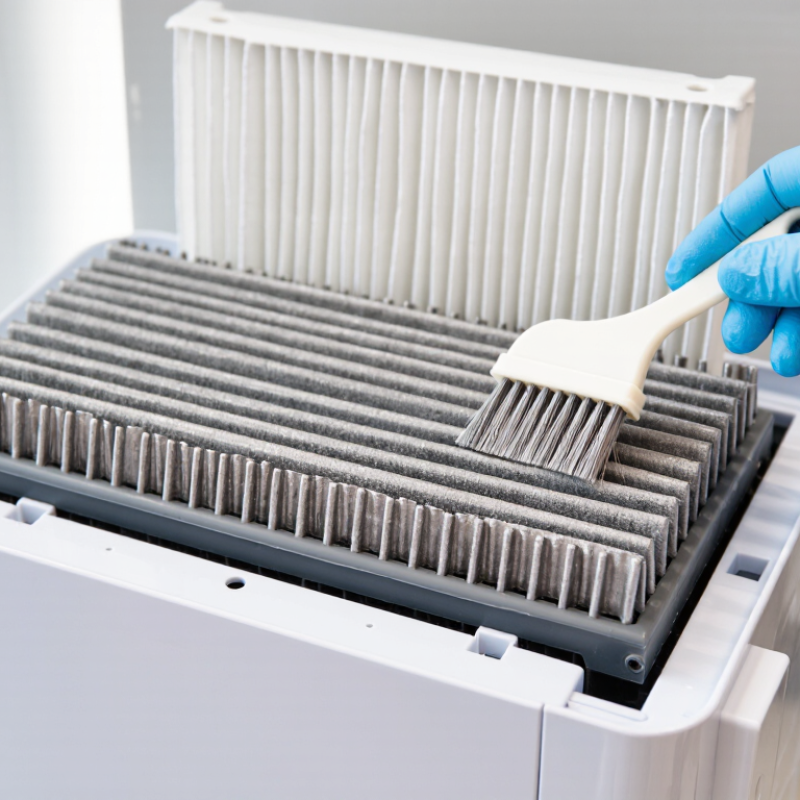
A heat pump depends on clean airflow to move heat through your home. The evaporator coil, usually inside the indoor air handler, absorbs heat from passing air. Dust, pet hair, and a clogged filter can leave a gray film on its narrow fins. Airflow may weaken, energy use can rise, and in some conditions the coil may ice over. The signs are not always obvious. A system can still run while working harder than it should.
Learning how to clean the evaporator coils on a heat pump can help homeowners understand routine care and spot when a job needs professional attention. The fins are delicate, like thin metal pages, and can bend if scrubbed or sprayed carelessly. Turn off power before inspecting the unit, and follow the manufacturer’s instructions for access and cleaning products. Never guess at electrical components or force open a sealed panel. Small dust deposits may be manageable, but heavy buildup, recurring ice, or damaged fins calls for a qualified HVAC technician. Cleaning is useful, but it is not a cure for every performance problem. I’ve seen people focus on the coil while overlooking a dirty filter or blocked return vent. That is an easy mistake. This guide explains why coil cleanliness matters, what a safe inspection involves, and when it is wiser to stop and call for help.
A heat pump transfers heat by circulating refrigerant through coils. The evaporator coil absorbs heat from the air around it. In heating mode, this is usually the outdoor coil. Even chilly air contains heat the refrigerant can absorb. As the refrigerant evaporates, it carries that heat through the system toward the indoor coil, where heat is released into the home. The process depends on airflow and close contact between air and the coil’s metal fins. Small details matter.
The coil’s name changes with the operating mode. During cooling, the indoor coil acts as the evaporator, absorbing heat from indoor air; during heating, the outdoor coil does that job. Dust, lint, and leaves can restrict airflow or coat the fins, making heat transfer less effective. A thin layer may look harmless, but it can contribute to longer run times and uneven comfort. Cleaning helps, though it cannot fix every performance problem. A clogged filter, damaged fins, or a refrigerant issue may also be involved. With power disconnected, a homeowner can check for visible debris, but delicate fins bend easily. Deep cleaning is better left to a qualified technician. I used to think a quick rinse was always enough; it isn’t.
| Topic | How It Works | Why Coil Cleanliness Matters |
|---|---|---|
| Evaporator coil’s role | The evaporator is the heat exchanger where refrigerant absorbs heat and changes from liquid to vapor. | Dust and debris on coil surfaces can interfere with airflow and heat transfer between the air and refrigerant. |
| Heating mode | The outdoor coil acts as the evaporator, collecting heat from outdoor air. The refrigerant carries that heat indoors. | A dirty outdoor coil can make it harder for the system to collect heat, potentially reducing heating capacity and efficiency. |
| Cooling mode | The indoor coil acts as the evaporator, absorbing heat from indoor air. The heat is then released outdoors. | A dirty indoor coil can impede heat absorption and airflow, which may reduce cooling performance and increase run time. |
| Airflow and heat exchange | Fans move air across the coil so heat can pass between the air and the refrigerant. | Keeping the coil and surrounding airflow path clear helps the system exchange heat as designed. |
| Possible signs of a problem | Reduced heating or cooling, longer operating cycles, or visible buildup may indicate restricted airflow or a maintenance issue. | These symptoms can have several causes; coil dirt is only one possibility and should be assessed with the rest of the system. |
| Cleaning and care | Keep the area around the outdoor unit clear and follow the heat pump’s maintenance instructions. Have internal or heavily soiled coils inspected by a qualified technician. | Careful cleaning helps avoid bending delicate fins or damaging components. Turn off power before any permitted maintenance. |
It transfers heat as air moves over narrow metal fins. In heating mode, the outdoor coil absorbs heat from outside air.
Dust, lint, and pet hair can restrict airflow and reduce heat transfer. Rooms may take longer to cool or warm.
It can make the heat pump run longer to reach the set temperature. Longer runtime may use more electricity, especially during extreme weather.
Look for weak airflow at vents, visible debris, or a system that runs unusually long. Not instantly. A gray film alone does not prove serious restriction.
The U.S. Department of Energy gives a rough benchmark of two to four units of heat per unit of electricity. This is not a guarantee for every home.
No. A clean coil can help the system operate as intended, but installation, outdoor temperature, and equipment condition also matter.
Avoid scraping them. The thin fins bend easily, and a bent section may restrict airflow further.
Arrange an inspection when performance changes or during routine maintenance. Have a qualified technician handle heavily soiled or hard-to-reach coils.
Keep the air filter clean and look for leaves or loose debris near the outdoor coil. Don’t spray electrical parts. A clean surface is useful, but it does not tell the whole story.
An evaporator coil helps a heat pump transfer heat between the air and its refrigerant. When dust and debris build up on the coil, they restrict airflow and make heat exchange less effective. The system may then provide less heating or cooling, run for longer periods, and use more energy. The U.S. Department of Energy’s benchmark that heat pumps can deliver roughly two to four units of heat for each unit of electricity helps illustrate their potential efficiency, but a dirty coil can undermine that performance.
Knowing how to clean the evaporator coils on a heat pump starts with checking the manufacturer’s instructions and switching off power before inspection. Use appropriate, non-damaging cleaning methods, and seek qualified help if the coil is difficult to access or heavily soiled. Regular inspection and cleaning should fit into a planned maintenance program, consistent with ASHRAE Standard 180’s framework for commercial building HVAC maintenance. Keeping the coil clear supports airflow, heat transfer, and reliable operation.

 PeakWay Pump