Why is r290 refrigerant better for the environment? This question matters as cooling demand grows worldwide. R290 is propane used as a refrigerant, not as household fuel. Its ozone depletion potential is zero, and its global warming potential is extremely low, commonly rated near 3. By comparison, many older synthetic refrigerants can create a much larger climate impact if released. The difference is measurable.
In real installations, R290 systems can also deliver efficient cooling with compact compressor designs. Lower electricity use can reduce indirect emissions from power generation. A supermarket freezer, for example, may operate for thousands of hours each year. Small efficiency gains can become significant over time. However, performance depends on equipment design, climate, maintenance, and correct charging. R290 is not automatically greener in every application.
Its main limitation is flammability. Certified technicians must follow approved installation procedures, charge limits, ventilation requirements, and local safety regulations. Manufacturers also need suitable components, leak protection, and clear service instructions. These details are not optional. They protect workers, customers, and the surrounding environment.
The environmental case is strong, but it should not be exaggerated. Manufacturing, transport, electricity consumption, and end-of-life recovery still matter. Field experience suggests that reliable maintenance often determines whether theoretical benefits become real savings. Independent assessments and recognized safety standards should guide purchasing decisions. R290 offers a practical lower-impact option, but responsible system design remains essential. That matters.
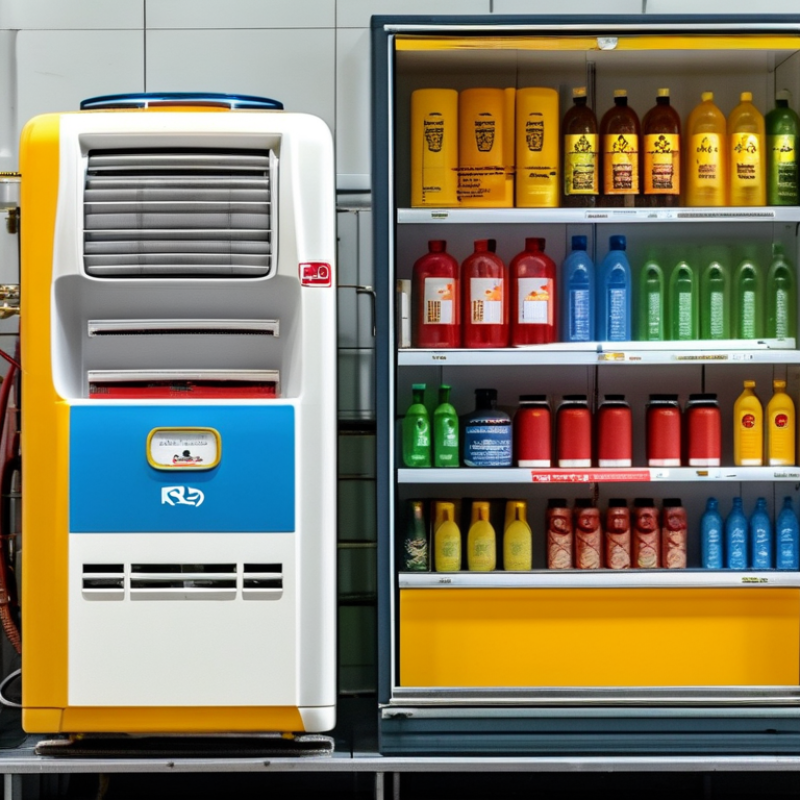
Why Is R290 Refrigerant Better for the Environment?
What Is R290 Refrigerant?
R290 is refrigerant-grade propane used in selected cooling and heat pump systems. It shares propane’s chemical name, but its purity is carefully controlled for refrigeration use. R290 contains no chlorine, so it has zero ozone depletion potential. Its global warming potential is also very low compared with many traditional synthetic refrigerants. This can reduce the climate impact of leaks during equipment use or disposal.
R290 also supports efficient heat transfer in properly designed systems. In practical service work, technicians often consider charge size, ventilation, electrical protection, and component compatibility before installation. However, R290 is flammable. That matters. It cannot simply replace another refrigerant without redesign and professional assessment. A careless retrofit may create serious safety risks. I would not call R290 a perfect solution; its environmental advantage depends on responsible manufacturing, installation, maintenance, and recovery. System efficiency also varies with climate, insulation, operating temperature, and maintenance quality.
Tips: Check the equipment label before servicing. Use trained technicians and approved tools. Keep ignition sources away from the work area. Follow local safety standards and manufacturer instructions. Never release any refrigerant intentionally.
| Environmental or Technical Dimension | R290 Refrigerant Data | Comparison or Context | Why It Matters |
|---|---|---|---|
| Chemical identity | R290 is propane, a naturally occurring hydrocarbon refrigerant. | Chemical formula: C3H8; molecular mass: approximately 44.10 g/mol. | Its simple chemical structure does not contain chlorine or fluorine atoms that contribute to ozone depletion or high fluorinated-gas global warming potential. |
| 100-year Global Warming Potential (GWP) | Approximately 3 under commonly used IPCC AR4 values. | For comparison, R134a is approximately 1,430, R410A approximately 2,088, and R32 approximately 675 on the same commonly used basis. | A similar mass of leaked R290 has a much lower direct climate impact than many conventional HFC refrigerants. |
| Ozone Depletion Potential (ODP) | 0 | R290 contains no chlorine or bromine atoms responsible for stratospheric ozone depletion. | It does not directly damage the ozone layer when used as a refrigerant. |
| Atmospheric persistence | Short atmospheric lifetime, generally on the order of weeks. | Its atmospheric breakdown is much faster than that of many long-lived synthetic greenhouse gases. | Shorter persistence limits the duration of its direct climate effect after accidental release, although preventing leakage remains important. |
| Boiling point at atmospheric pressure | Approximately −42.1°C | This low boiling point enables R290 to evaporate readily and operate across common refrigeration temperature ranges. | It is suitable for many cooling and heating applications when the system is correctly designed and controlled. |
| Energy-efficiency potential | Can provide high efficiency in appropriately designed systems. | Actual performance depends on compressor design, heat-exchanger size, operating temperatures, controls, ambient conditions, and system charge. | Lower electricity consumption can reduce indirect carbon emissions from power generation, in addition to R290’s low direct GWP. |
| Direct and indirect climate impact | Low direct climate impact combined with the potential for efficient operation. | Lifecycle emissions depend on manufacturing, electricity use, refrigerant leakage, servicing, recovery, and end-of-life treatment. | Environmental performance should be evaluated across the entire equipment lifecycle rather than by refrigerant GWP alone. |
| Flammability classification | A3: higher flammability under common refrigerant safety classifications. | R290 is highly flammable and must be used within applicable safety standards, charge limits, ventilation requirements, and equipment design rules. | Its environmental advantages require professional installation, leak prevention, suitable components, and safe servicing procedures. |
| Refrigerant charge considerations | Systems generally use a relatively small charge because R290 has favorable thermodynamic properties. | The permitted charge depends on equipment type, installation location, enclosure design, safety standard, and local regulations. | Reducing the quantity of refrigerant in a system can reduce potential leakage impact and improve safety management. |
| Natural refrigerant status | Yes. R290 is classified as a natural refrigerant. | Other natural refrigerants include carbon dioxide, ammonia, water, and certain hydrocarbons. | Natural refrigerants can offer very low GWP, but each option has different pressure, toxicity, flammability, and application requirements. |
| End-of-life handling | Refrigerant should be recovered, reused where appropriate, or disposed of according to applicable regulations. | R290 should not be intentionally vented, even though its GWP is low. | Responsible recovery prevents avoidable emissions and protects technicians and the surrounding environment. |
Key takeaway: R290 is environmentally attractive because it has zero ozone depletion potential, very low global warming potential, short atmospheric persistence, and the potential to support efficient refrigeration systems. Its A3 flammability classification means that safety-compliant equipment design, installation, maintenance, and refrigerant recovery are essential.
Data basis: Values are based on commonly cited refrigerant property data and IPCC AR4 100-year GWP values. GWP figures can vary slightly between assessment reports and calculation methods.
R290 is refrigeration-grade propane used in selected cooling and heat pump systems. Its purity is controlled for equipment use. It contains no chlorine.
R290 has zero ozone-depletion potential and a very low global warming potential. Its estimated 100-year value is about 3.3. That is notably lower than many older synthetic refrigerants.
Properly designed systems may transfer heat efficiently and shorten compressor run times. Clean coils and clear airflow help. Results vary with climate, insulation, temperature, and maintenance.
No. Manufacturing, electricity use, leaks, servicing, and disposal still affect its total impact. A neglected system may waste energy. That detail is easy to overlook.
No. R290 is highly flammable and requires approved components, controlled charges, ventilation, and suitable electrical protection. It cannot simply replace another refrigerant.
They should check the equipment label, charge size, component compatibility, ventilation, and local requirements. Approved tools and calibrated leak-detection equipment are important. Improvisation creates risk.
Watch for unusual smells, repeated cycling, unexpected frost, damaged wires, or unstable cabinet temperatures. Request qualified service promptly. Do not investigate with an ignition source.
Keep condenser coils clean, protect airflow, and inspect door seals. Record energy use occasionally. Keep ignition sources away during service. Small details matter.
R290 refrigerant, commonly known as propane, is a natural refrigerant used in selected air-conditioning, refrigeration, and heat-pump systems. When asking “why is r290 refrigerant better for the environment,” the main reasons are its zero ozone-depletion potential and extremely low global-warming potential compared with many traditional synthetic refrigerants. It can therefore help reduce the climate impact of cooling equipment while supporting the long-term protection of the ozone layer.
R290 can also provide efficient cooling and heating performance, which may reduce energy consumption during operation. It is used in systems such as commercial refrigerators, compact cooling units, heat pumps, and certain air conditioners. However, because propane is flammable, equipment must be properly designed, installed, maintained, and operated with suitable safety controls. With responsible handling and appropriate system design, R290 offers an effective balance of environmental benefits, energy efficiency, and practical performance.

 PeakWay Pump