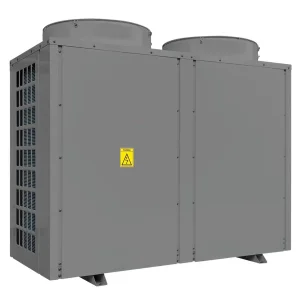
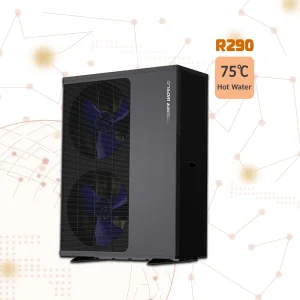
As the global push for carbon neutrality intensifies, the role of Air-to-Water (ATW) Chiller systems has transitioned from a luxury HVAC component to a critical infrastructure requirement. Modern manufacturers are no longer just building machines; they are engineering high-density energy management solutions. This white paper explores the pinnacle of manufacturing expertise, focusing on the synergy between advanced Chinese fabrication capabilities and the demanding requirements of global energy standards such as the EU's F-Gas Regulation and ErP directives.
The "Top 10 Manufacturers" featured here represent the intersection of high-efficiency thermal transfer, AI-driven inverter control, and sustainable refrigerant adoption (R290/R32). By providing significant Information Gain regarding system architecture, supply chain reliability, and localized application data, we aim to guide global procurement officers toward the most resilient and future-proof partnerships.
Factories in Zhejiang and Guangdong benefit from a hyper-local ecosystem. Compressors, heat exchangers, and PCB controllers are often sourced within a 50km radius, reducing lead times by 40% compared to European counterparts.
Chinese manufacturers like PeakWay invest over 10% of annual revenue into R&D. This allows for rapid prototyping of R290 (Propane) systems which are critical for the European "Green Transition."
Producing tens of thousands of units monthly allows for standardized quality control at a cost-basis that remains inaccessible to boutique Western manufacturers, without sacrificing EVI technology standards.
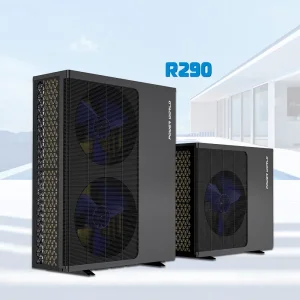
The evolution of the Air-to-Water Chiller is currently defined by three major technological shifts. First is the Universal Adoption of Low-GWP Refrigerants. With R290 emerging as the gold standard for eco-conscious markets, factories are redesigning explosion-proof production lines to handle Propane safely. This shift is not just environmental; R290 offers superior thermodynamic properties, allowing for higher flow temperatures at lower ambient conditions.
Second, AI-Optimized Heat Pump Intelligence. Modern chillers are no longer "set and forget." They integrate with weather forecast APIs and Smart Grids. Using machine learning, these systems predict heating loads and adjust DC Inverter frequencies to prevent short-cycling, extending the compressor's lifespan by up to 25%.
Third, Sector Coupling and Hybrid Systems. We are seeing a massive surge in industrial waste heat recovery. Factories are now integrating ATW chillers with solar thermal arrays and geothermal loops to create "Micro-Thermal Grids" for large-scale commercial facilities.
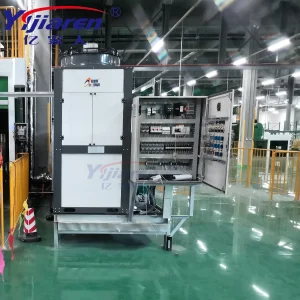
From a macro perspective, the Decarbonization of District Heating in Eastern Europe and North America is driving the demand for cascaded high-power chiller banks. This requires manufacturers to provide not just hardware, but sophisticated PLC (Programmable Logic Controller) software that can manage up to 16 units in a single synchronized loop.
Zhejiang PeakWay Pump Co., Ltd. specializes in the research, development, manufacturing, and application of air source heat pump systems. As a professional manufacturer in China’s heat pump industry, PeakWay is recognized for its strong technical capabilities and continuous innovation.
The company offers a comprehensive product portfolio, including residential units, commercial systems, low-temperature dual-supply systems, low-temperature triple-supply systems, high-temperature hot water units, and high-temperature drying equipment. With dozens of models and configurations available, PeakWay’s products are widely used in residential, commercial, and industrial applications, covering heating, cooling, domestic hot water, and industrial drying needs.
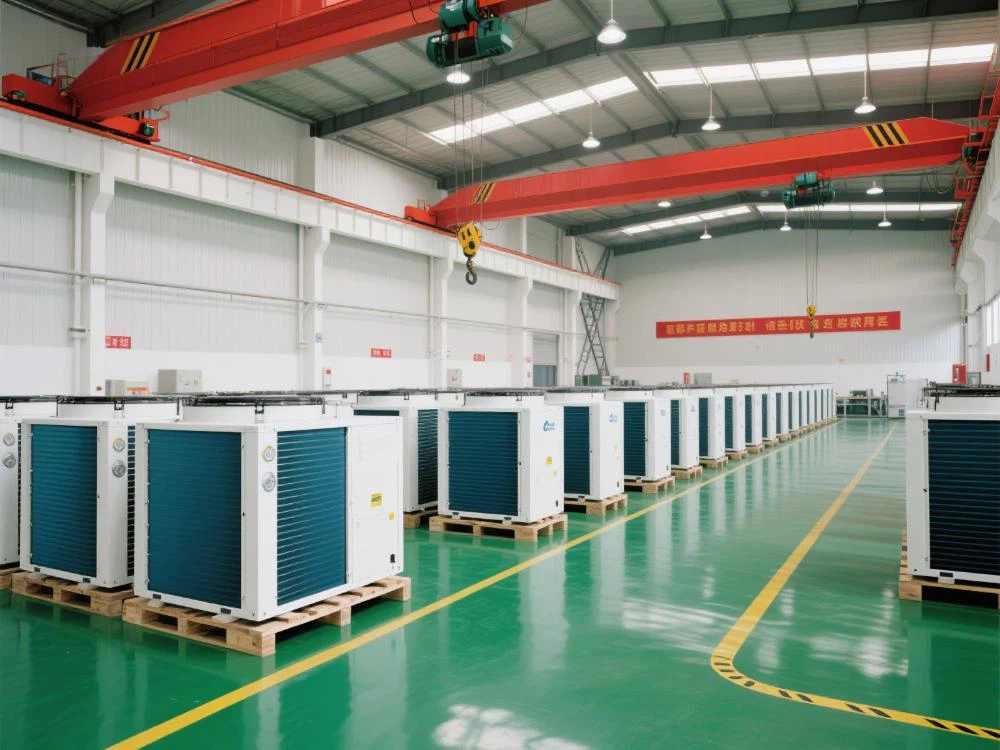
Guided by market demand, PeakWay is committed to delivering high-efficiency and energy-saving solutions to its customers. The company operates a modern manufacturing facility equipped with multiple intelligent heat pump production lines. By adopting standardized and automated assembly processes, along with strict quality control at every stage, PeakWay ensures consistent and reliable product performance. The company adheres to international quality standards as well as national and industry regulations, striving to achieve near zero-defect manufacturing.
In terms of quality assurance and certifications, PeakWay has obtained ISO 9001:2015 Quality Management System certification and ISO 45001 Occupational Health and Safety Management System certification. The company is also equipped with advanced testing capabilities for extreme conditions, including low-temperature performance testing. Its products have repeatedly passed authoritative inspections, demonstrating excellent stability and durability.
PeakWay upholds a “people-oriented and innovation-driven” philosophy, continuously investing in core technologies, advanced equipment, and comprehensive after-sales service systems. The company has established a well-structured service network, providing one-stop solutions from system design and product selection to installation, commissioning, and maintenance, earning strong trust and reputation among its customers.
Looking ahead, Zhejiang PeakWay Pump Co., Ltd. will continue to be driven by technological innovation and customer value, constantly enhancing product competitiveness and service quality. The company is committed to working closely with partners worldwide to promote green energy solutions and achieve mutual growth and long-term success.
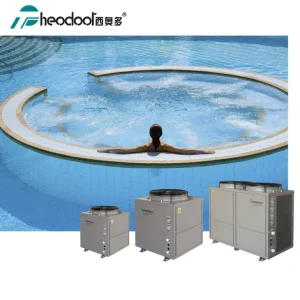
Hotels in Europe and SE Asia utilize centralized ATW chillers to provide 24/7 hot water while simultaneously cooling kitchen and server rooms through heat recovery. This dual-purpose utility reduces operational costs by nearly 50%.
In the chemical and food industry, high-temperature heat pumps are used to replace steam boilers. Reclaiming waste heat from drainage and repurposing it for process heating is the new standard for ESG-compliant factories.
With EVI (Enhanced Vapor Injection) technology, monoblock units now provide reliable heating in sub-zero climates (-30°C) like Canada and Northern China, eliminating the need for fossil fuel backup.
 PeakWay Pump