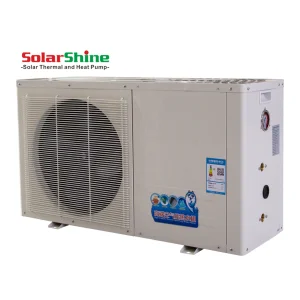
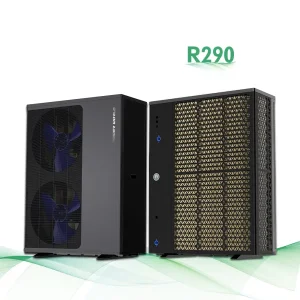
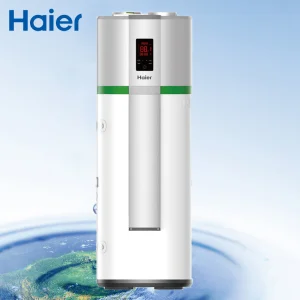
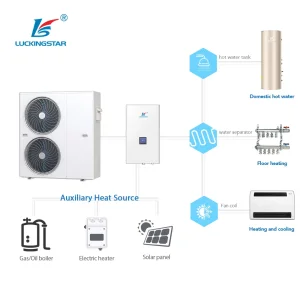
The intersection of hydronic loop systems and advanced thermal management technologies is driving unprecedented growth in clean industrial and commercial heating.
The global transition away from fossil-fuel-based heating systems has pushed the fan coil heat pump system to the forefront of architectural and building services design. Combining the thermodynamic efficiency of air-to-water or water-to-water heat pumps with the precise localized control of hydronic fan coil units (FCUs), these systems offer an integrated approach to modern HVAC design. According to recent industrial market intelligence, the demand for commercial-scale fan coil heat pump systems is expanding at a CAGR of 11.4% globally, heavily supported by legislative decarbonization mandates across the European Union (REPowerEU) and North America (IRA - Inflation Reduction Act).
From an operational perspective, traditional DX (Direct Expansion) VRF systems are facing critical regulatory bottlenecks due to large refrigerant volumes passing directly through occupied spaces. Conversely, hydronic fan coil heat pump arrangements isolate the primary refrigerant cycle inside a sealed unit (typically outdoors or in a mechanical room) and circulate pressurized, conditioned water throughout the building interior. This significantly mitigates refrigerant leak risks, aligns with strict environmental protocols, and allows engineers to incorporate low-GWP (Global Warming Potential) natural refrigerants such as R290 (Propane) and CO2 (R744).
Compliance with the phase-down of F-gases under the Kigali Amendment has accelerated the adoption of natural refrigerants. Systems built around R290 and CO2 cycles enable businesses to future-proof their installations against regulatory penalties.
By pairing variable-speed DC inverter compressors with hydronic fan coil terminals, facility managers can achieve up to 40% reduction in electricity consumption compared to legacy boiler-and-chiller configurations.
Modern fan coil networks communicate directly with central heat pump controllers via Modbus or BACnet, enabling real-time water flow adjustments that match load fluctuations precisely.
How different geopolitical zones adapt fan coil heat pump architectures to their unique ambient environments and local utility profiles.
In regions experiencing extended sub-zero winters, such as Scandinavia, Germany, and Poland, the emphasis is placed heavily on Enhanced Vapor Injection (EVI) technology. EVI systems introduce a secondary vapor line into the scroll compressor, maintaining high thermal output capacity even when ambient temperatures fall to -25°C. When paired with high-temperature fan coil systems, they serve as drop-in replacements for fossil-fuel boilers without requiring extensive upgrades to existing terminal distribution systems.
For regions requiring both intense summer cooling and moderate winter heating, the system of choice is the Triple-Supply Heat Pump. By utilizing a 4-way valve and recovery heat exchangers, these units seamlessly produce domestic hot water (DHW) as a byproduct of the space cooling process, maximizing seasonal energy efficiency ratios (SEER) and reducing thermal waste.
Urban retrofits in commercial properties within Canada and the US require flexible physical footprints. Sourcing strategies focus on split-type inverter configurations where the outdoor evaporator connects to an indoor hydrobox, preventing freeze-up risks without the need for glycol mixtures. This layout simplifies maintenance and conforms to local plumbing and electrical safety codes (UL 60335-2-40).
A detailed comparison of thermodynamic agents utilized by top exporters to achieve efficiency targets and eco-compliance.
| Refrigerant Type | Global Warming Potential (GWP) | Max Outlet Water Temp | Primary Application Domain | Thermodynamic Efficiency (COP) |
|---|---|---|---|---|
| Propane (R290) | 3 | 75°C | Residential Low-Temp Heating, High-Temp Retrofits | High (4.8 - 5.2) |
| Difluoromethane (R32) | 675 | 60°C | Commercial Multi-Function Heating & Cooling | Medium-High (4.2 - 4.6) |
| Carbon Dioxide (R744 / CO2) | 1 | 90°C | Industrial Waste Heat Recovery, High-Temp DHW | Excellent for hot water (4.5+) |
| R410A | 2088 | 55°C | Legacy Commercial Water Chillers & Pool Heaters | Medium (3.8 - 4.2) |
Insight into the upcoming integration cycles, automation features, and structural enhancements in the next 5 years.
Total adoption of R290 and CO2 sealed cycles across commercial ranges, eliminating synthetic refrigerants from light commercial buildings.
Integration of IoT controllers linked with cloud diagnostic platforms to predict valve, compressor, and sensor failures before they occur.
Dynamic communication protocol allowing heat pumps to load-shed or pre-heat water dynamically using excess local solar generation (SG Ready).
Hybrid systems that combine geothermal (ground source) base-loading with air-to-water booster units to handle extreme peak demands.
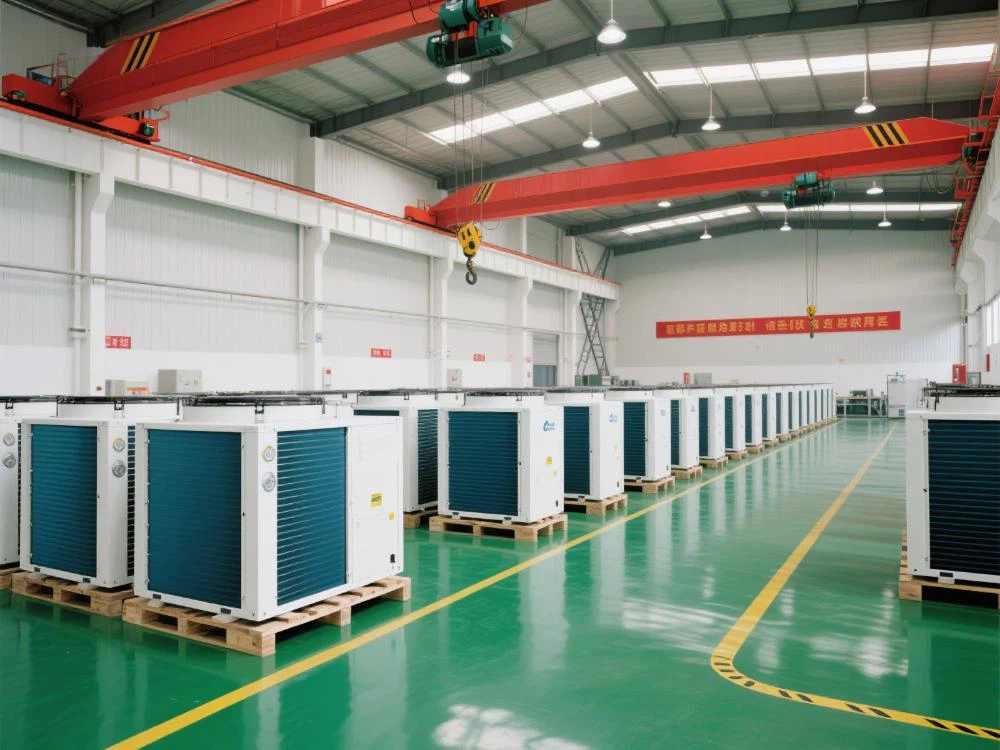
Zhejiang PeakWay Pump Co., Ltd. specializes in the research, development, manufacturing, and application of air source heat pump systems. As a professional manufacturer in China’s heat pump industry, PeakWay is recognized for its strong technical capabilities and continuous innovation.
The company offers a comprehensive product portfolio, including residential units, commercial systems, low-temperature dual-supply systems, low-temperature triple-supply systems, high-temperature hot water units, and high-temperature drying equipment. With dozens of models and configurations available, PeakWay’s products are widely used in residential, commercial, and industrial applications, covering heating, cooling, domestic hot water, and industrial drying needs.
Guided by market demand, PeakWay is committed to delivering high-efficiency and energy-saving solutions to its customers. The company operates a modern manufacturing facility equipped with multiple intelligent heat pump production lines. By adopting standardized and automated assembly processes, along with strict quality control at every stage, PeakWay ensures consistent and reliable product performance. The company adheres to international quality standards as well as national and industry regulations, striving to achieve near zero-defect manufacturing.
In terms of quality assurance and certifications, PeakWay has obtained ISO 9001:2015 Quality Management System certification and ISO 45001 Occupational Health and Safety Management System certification. The company is also equipped with advanced testing capabilities for extreme conditions, including low-temperature performance testing. Its products have repeatedly passed authoritative inspections, demonstrating excellent stability and durability.
Upholding a “people-oriented and innovation-driven” philosophy, PeakWay continuously invests in core technologies, advanced equipment, and comprehensive after-sales service systems. The company has established a well-structured service network, providing one-stop solutions from system design and product selection to installation, commissioning, and maintenance, earning strong trust and reputation among its customers.
With the global emphasis on energy conservation, environmental protection, and sustainable development, air source heat pumps are becoming an increasingly important clean energy solution. Thanks to outstanding product performance and significant energy-saving benefits, PeakWay’s products are gaining growing recognition in the market and are becoming a preferred choice for customers worldwide. Looking ahead, Zhejiang PeakWay Pump Co., Ltd. will continue to be driven by technological innovation and customer value, constantly enhancing product competitiveness and service quality, working closely with partners globally to promote green energy solutions and achieve mutual growth.
Understanding hydraulic isolation, variable flow setups, and bypass configurations to maintain optimal COP.
To prevent flow rate fluctuation issues within the heat pump evaporator, top exporters recommend utilizing low-loss headers or buffer tanks to decouple the primary generation loop from the secondary distribution loop. This guarantees constant compressor flow while allowing individual fan coil valves to modulate freely based on room load.
Modern fan coils require precise inlet water temperature control to prevent condensation during cooling modes and cold-drafts during heating startups. Intelligent 3-way mixing valves managed directly by the central unit prevent rapid thermal cycles and system wear.
Ice buildup on air-source evaporators is handled automatically via reverse-cycle defrost. Using a storage-rich buffer tank ensures the energy required for defrosting is drawn from stored warm water rather than cooling down occupied residential spaces, preserving occupant comfort.
Detailed answers to the most common engineering and commercial questions raised by international procurement managers.
R290 (Propane) is a natural refrigerant with a negligible GWP of 3, allowing for high outlet water temperatures up to 75°C. This makes it ideal for radiator retrofits and colder European climates. R32 is a synthetic A2L refrigerant with a GWP of 675, supporting outlet temperatures up to 60°C. R32 systems are widely used in commercial settings due to high efficiency at moderate temperatures and more relaxed storage/transport safety protocols compared to R290, which requires explosion-proof safety components.
EVI injects a portion of medium-pressure refrigerant vapor into the compression chamber of the scroll compressor via an economizer cycle. This lowers the discharge temperature of the compressor, allowing it to compress refrigerant across a wider temperature differential. As a result, EVI units maintain high heating capacities and high COP values even in extremely low ambient temperatures down to -25°C, where standard compressors would face thermal trip risks.
Buyers should prioritize exporters with ISO 9001 and ISO 45001 certifications, a dedicated low-temperature enthalpy testing laboratory, and compliance marks like CE, Keymark, and ERP reports (A+++ rating). In addition, verify that their supply chain handles localized electrical standards (e.g., 50Hz for Europe/APAC, 60Hz for North America) and offers robust warranties with modular replacement components.
Yes. Premium configurations feature "PV-Ready" or "SG Ready" ports. These inputs receive signals from solar inverters when excess power is generated. The heat pump then runs in a temporary overdrive mode, storing energy as hot water in the buffer tank or DHW cylinder, effectively converting thermal storage into a clean battery system.
A buffer tank increases the overall water volume in the hydronic loop. Without it, when individual room thermostats close their respective fan coil valves, the total circulating volume drops. This leads to compressor "short-cycling", which reduces mechanical lifespan and efficiency. The buffer tank also stores thermal energy to handle reverse-cycle defrost periods smoothly without extracting heat from the building interior.
 PeakWay Pump